Call us at +306949885983
A Greek’s Honest Guide to Visiting Greece Without the Crowds

Let me tell you what most travel blogs won’t. Greece is not Santorini. Greece is not the white-and-blue postcard, the infinity pool, the Oia sunset with two thousand other people watching it alongside you.
Those places are real, and yes, they are beautiful — I won’t insult your intelligence by pretending otherwise. But they are one thin layer of a country that has an enormous amount underneath it, and most first-time visitors never get there because nobody told them it existed.
I’m Tasos. I was born in Volos, I’ve lived here my whole life, and I’ve spent years watching tourists arrive with the same itinerary, leave mildly overwhelmed, and tell their friends Greece was “amazing but so crowded.” It doesn’t have to be that way. Here’s what I’d actually tell a friend visiting for the first time.
First: Understand Why the Crowds Concentrate
Greece gets around 33 million tourists a year in a country of 10 million people. The vast majority funnel into the same six or seven destinations — Santorini, Mykonos, Rhodes, Corfu, Athens, and Crete’s northern coast. Why? Because those are the places that got photographed first, marketed loudest, and booked earliest. A self-reinforcing loop that has very little to do with those places being objectively better than everywhere else.
The result is that in peak summer, those destinations are genuinely difficult to enjoy. Queues at archaeological sites. Restaurants booked two weeks ahead. Ferry ports that feel like airports. Meanwhile, an island forty minutes away by boat is half-empty, just as beautiful, and completely unbothered.
The secret to Greece isn’t a hidden hack or an obscure trick. It’s simply being willing to go slightly off the path that everyone else is already on.
Skip Mykonos. Go to Syros Instead.
I’ll say this plainly: Mykonos in July is one of the least relaxing places I have ever been in my own country. It is loud, extraordinarily expensive, and built almost entirely around a party culture and a luxury tourism economy that has priced out the locals and replaced the genuine character of the island with a performance of it.
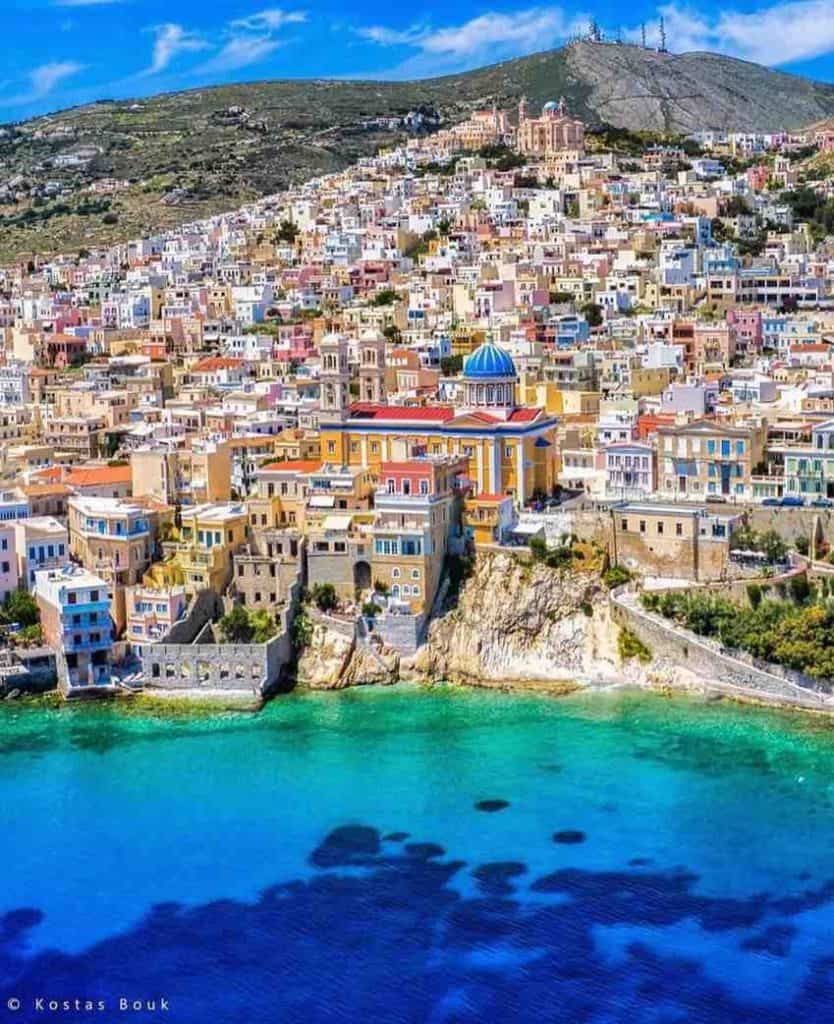
Syros is the capital of the Cyclades — the island group that includes Mykonos and Santorini — and it is almost entirely ignored by international tourists. This makes no sense to me whatsoever, because Ermoupoli, the main town, is one of the most architecturally stunning cities in Greece. Neoclassical mansions rising from the harbor, a marble-paved main square with a town hall that looks like it belongs in Vienna, two hills each topped with a different church — one Catholic, one Orthodox, because Syros has had both communities living side by side for centuries.
The island has real life on it. Actual residents, actual neighborhoods, a cultural scene, good restaurants that serve food to locals year-round rather than tourists for three months. You can walk the harbor at 10pm and feel like you’re somewhere that exists independently of your visit. That feeling is increasingly rare in the Greek islands, and Syros has it in abundance.
Instead of Santorini: Milos
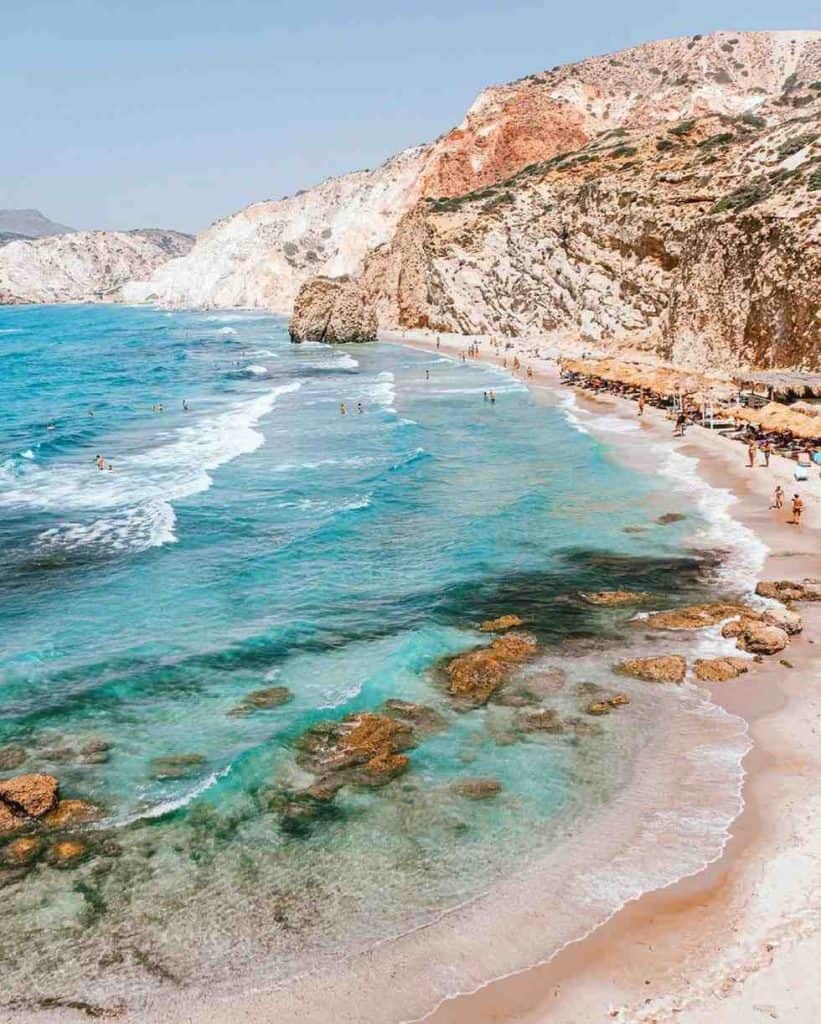
Milos is a volcanic island in the Cyclades with geology so dramatic it looks slightly unreal. Colored rock formations dropping into turquoise water, sea caves you can swim into, beaches in shades of white, red, and green depending on the mineral content of the cliffs above them. Sarakiniko beach — white pumice rock carved by wind into smooth alien shapes — is unlike anything else I’ve seen in Greece.
Milos gets visitors, but nothing approaching Santorini’s numbers. There are no cruise ships crowding the port every morning. The villages inland — Plaka, Triovasalos, Tripiti — are quiet, genuinely inhabited, and give you a sense of what Cycladic village life actually looks like when it hasn’t been converted entirely into hotels and souvenir shops.
The Catacombs of Milos are one of the most significant early Christian monuments in the world and are visited by almost nobody relative to their importance. You can walk through them with a small group and a local guide who actually knows the history. The contrast with queuing at the Acropolis is stark.
One practical note: Milos has some of the best seafood tavernas in the Cyclades. Eat at the port in Pollonia. Order whatever came in that morning. You will not regret it.
The Peloponnese: The Mainland Nobody Visits
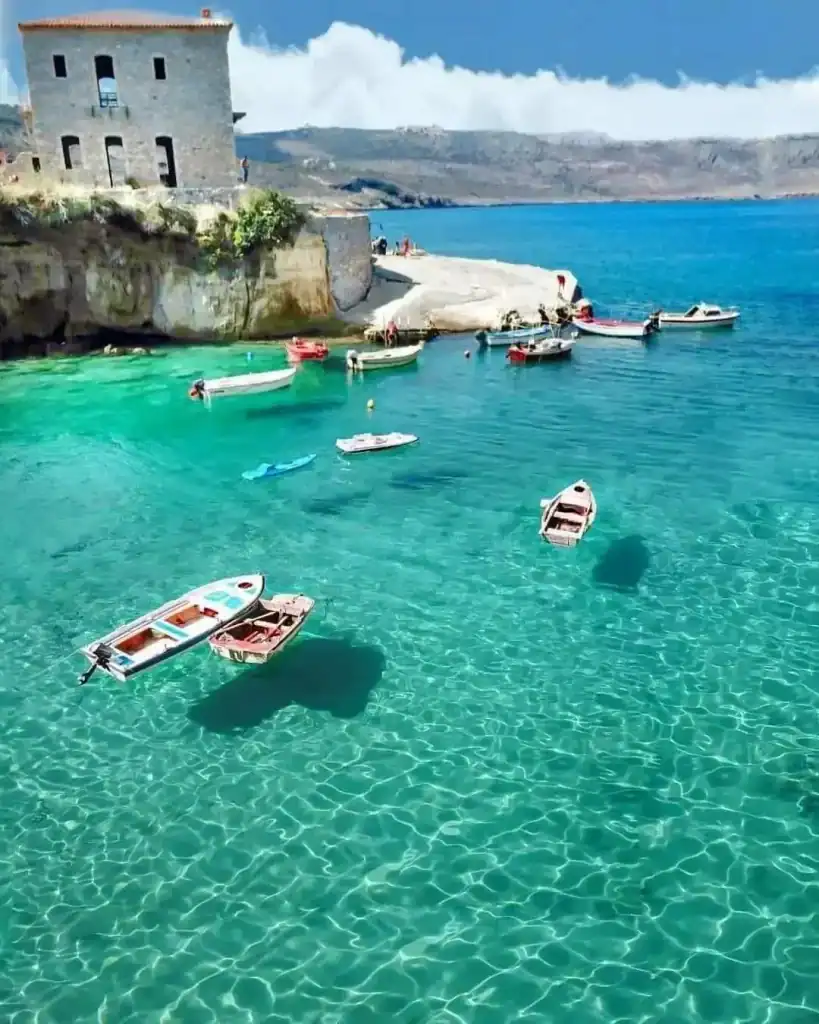
If you are a first-time visitor to Greece and you are only thinking about islands, I want to gently push back. The Peloponnese peninsula — attached to the mainland by a narrow strip of land near Corinth — is one of the most historically rich and scenically varied regions in the entire country, and international tourists largely ignore it in favor of taking a ferry somewhere.
Nafplio should be the first stop. It was the first capital of modern Greece, and you can feel the weight of that history in the architecture — Venetian fortresses, Ottoman fountains, neoclassical townhouses all compressed into a small peninsula jutting into the Argolic Gulf. The old town is walkable in an afternoon but rewards several days. The fortress of Palamidi sits above the town on a rock, reached by 999 steps (I have counted, twice), and the view from the top makes the climb immediately worthwhile. Nafplio has excellent restaurants, a genuinely local atmosphere, and in spring and autumn it belongs almost entirely to you.
Monemvasia is harder to explain without sounding like I’m exaggerating, so I’ll just describe it: a medieval Byzantine city built entirely on a rock that rises from the sea, connected to the mainland by a single narrow causeway. You pass through a tunnel in the rock and emerge into a walled settlement of Byzantine churches, stone houses, and cobbled lanes where no cars can enter. Around 50 people still live permanently inside the walls. It is extraordinary, it is real, and most first-time visitors to Greece have never heard of it.
The Mani peninsula is the middle prong of the Peloponnese, and it looks like nowhere else in Greece. Harsh, rocky, dramatic — tower houses built by local clans for centuries of feuding, Byzantine churches hidden in olive groves, a coastline that is completely uncommercialized. The people of the Mani are famously proud and reserved, which means the hospitality, when it comes, feels genuinely meant.
On the Islands: Go Smaller Than You Think
First-time visitors typically assume bigger islands mean better experiences. In my experience, the opposite is more often true. Here’s a quick reference:
| Popular Choice | Lesser-Known Alternative | Why It’s Better for First-Timers |
|---|---|---|
| Santorini | Folegandros | Clifftop Chora, no cruise ships, authentic pace |
| Mykonos | Syros | Real town life, stunning architecture, half the price |
| Rhodes (main town) | Halki | Tiny island, neoclassical harbor, no cars, empty beaches |
| Corfu town | Paxos / Antipaxos | Tiny islands, impossible blue water, genuine quiet |
| Crete (north coast) | Crete interior / south coast | Gorges, mountain villages, deserted beaches |
A note on Folegandros specifically, since I recommend it constantly and people always ask: it is small, it has limited accommodation, and it books up. Plan it further ahead than you think necessary. But do plan it. The Chora — the main village sitting on the cliff edge — is the most dramatically situated village I know in the Greek islands, and the island has made a conscious decision not to expand its tourism infrastructure beyond what the place can absorb. That restraint shows in every part of the experience.
Athens: Stay Longer Than Two Days

Almost every first-timer treats Athens as a one-night stopover before the islands. I understand why — the islands are the reason most people come — but Athens deserves more than that, and it will surprise you if you give it the chance.
The neighborhoods that matter are not the ones around the Acropolis. Koukaki, just south of the Acropolis, is where Athenians actually live — good coffee shops, independent restaurants, a neighborhood feel completely different from the tourist zone. Exarchia is chaotic, political, covered in murals, and has some of the best small tavernas in the city. Monastiraki on a weekday morning, before the tourist groups arrive, is genuinely one of my favorite places to have breakfast anywhere in the world.
The National Archaeological Museum is one of the greatest museums in Europe and is perpetually under-visited because it’s not centrally located. Give it a full morning. The collection of Cycladic art alone is worth the visit.
Stay three nights in Athens minimum. It will change how you understand everything else you see in Greece.
The Honest Advice
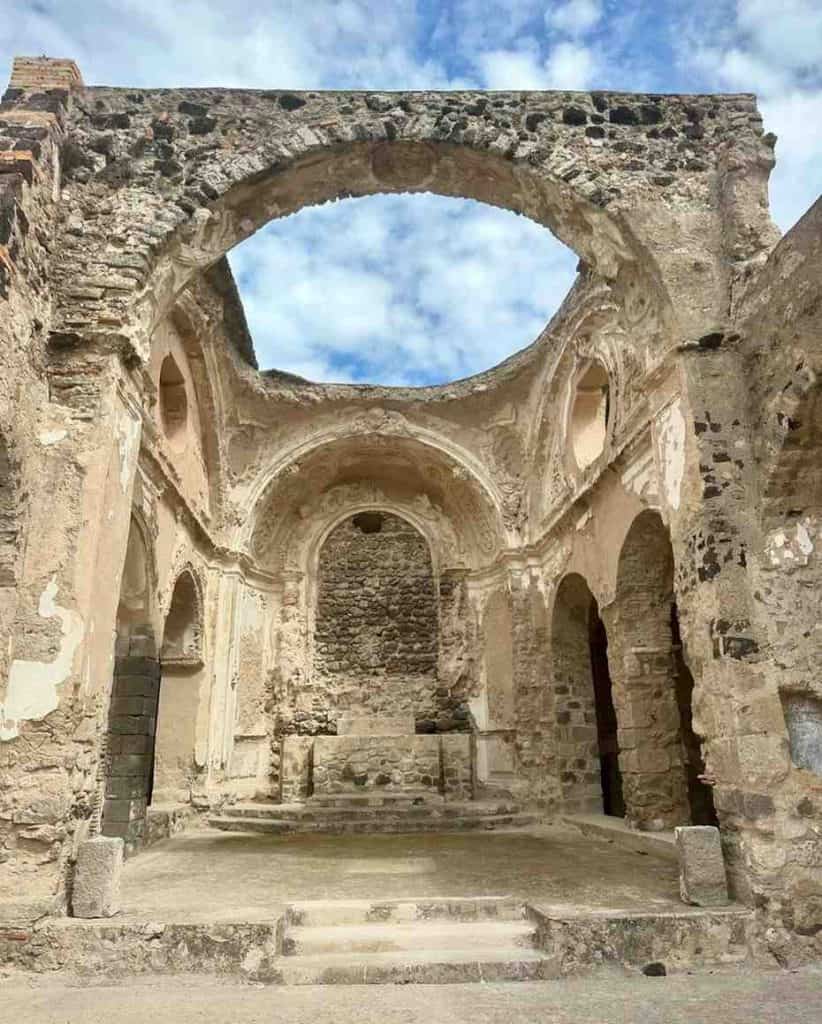
Greece does not hide its best parts. They are simply in the places that require one extra ferry, one more hour of research, one decision to not do what the itinerary template suggests. The reward for that small additional effort is enormous — it’s the difference between experiencing Greece as a backdrop and experiencing it as an actual place.
The crowds exist where the crowds are told to go. Go somewhere else, and you’ll find a country that is warmer, quieter, more generous, and more itself than anything you’ve seen in the photographs.
That’s the Greece I grew up in. It’s still there, waiting.
— Tasos
About The Author
