Call us at +306949885983
The Ultimate Guide to Cruising the Greek Islands

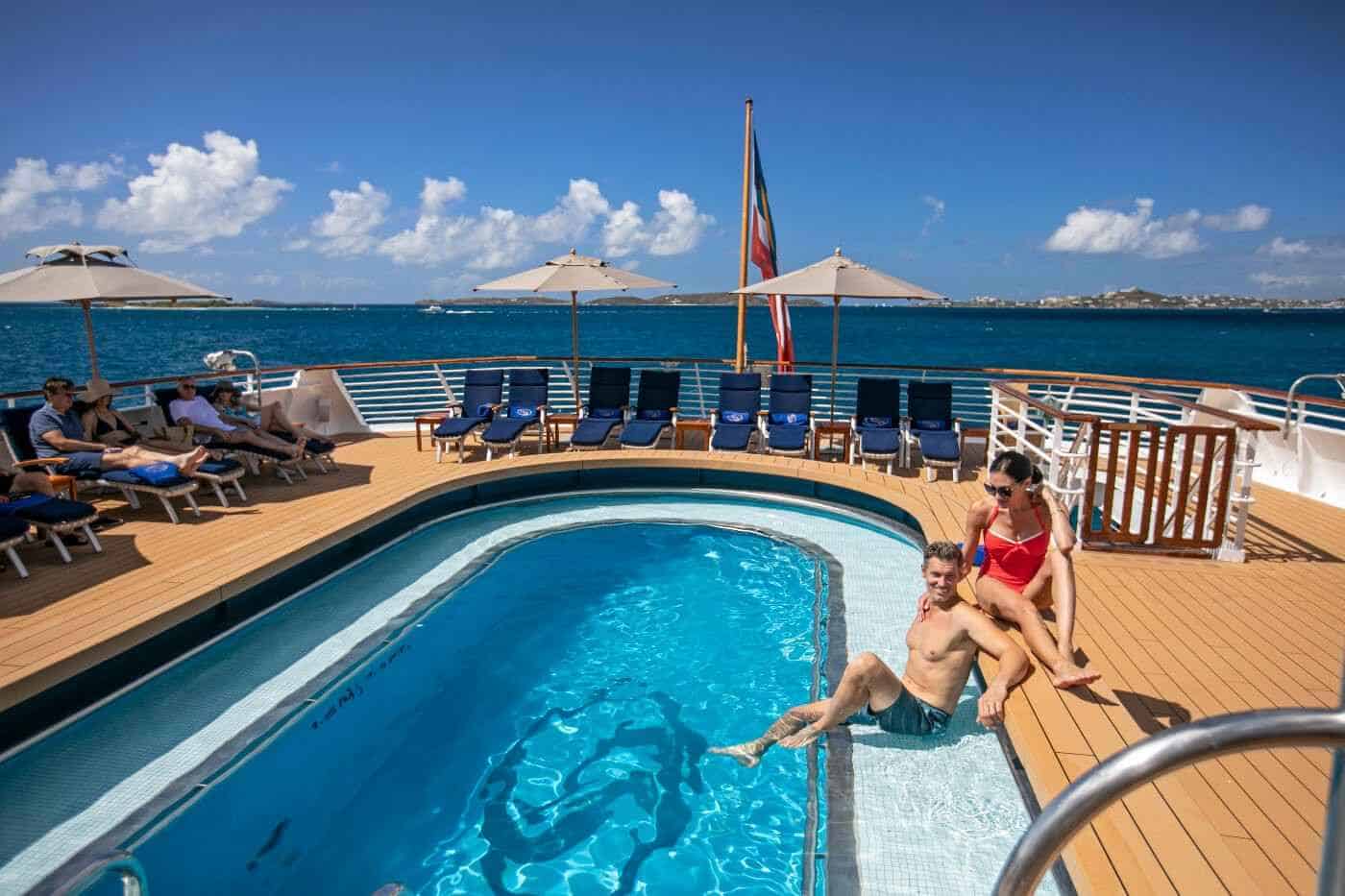
There is a profound difference between visiting Greece and sailing Greece.
When you travel by sea, the journey isn’t a bus ride or a stressful airport layover—it is the destination itself.
Waking up to the deep sapphire blue of the Aegean, pulling into a new whitewashed harbor while you eat breakfast, and watching the sunset dip below the horizon with nothing but open water around you is an experience that land-based island hopping simply cannot match.
But the way you choose to cruise drastically changes the trip you will have. From floating mega-resorts to intimate 50-passenger yachts, here is exactly how to navigate your Greek island cruising options, when to go, and how to navigate the brand-new port fees you need to know about for 2026.
The Three Distinct Ways to Sail Greece
The most crucial decision you will make is the size of your vessel. In Greece, size dictates access. A ship that holds 4,000 people cannot physically enter the tiny, authentic harbors that a 50-person catamaran can.
1. The Mega Ship Experience (3,000+ Passengers)
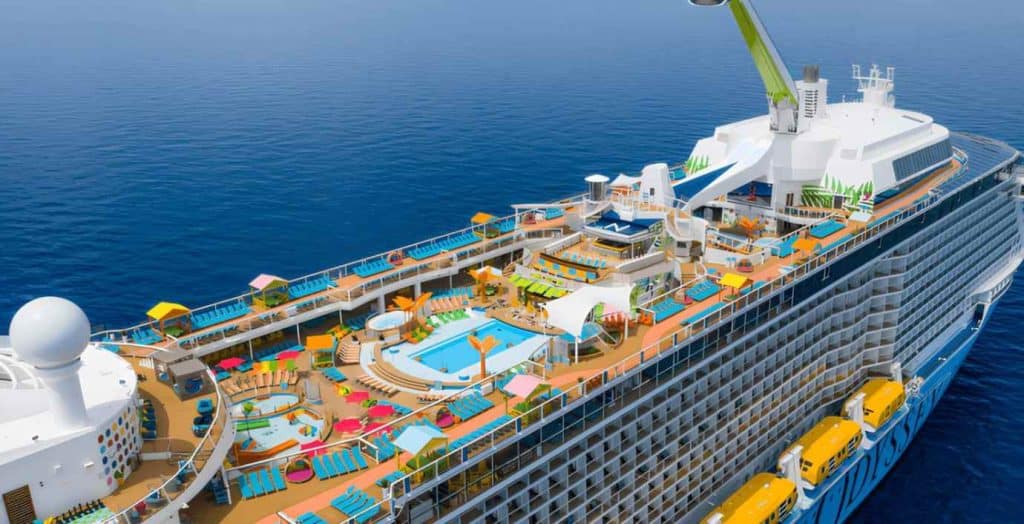
If you book a major global cruise line (like Royal Caribbean, Norwegian, Celebrity, or MSC), you are booking a floating luxury resort
Large cruise ships must anchor in deep water, like the Santorini caldera.
- The Vibe: High-energy, packed with amenities, and logistically effortless.
- The Pros: These ships offer unbeatable value for families and those who want non-stop entertainment. You have Broadway-style shows, massive casinos, multiple pools, kids’ clubs, and unlimited dining options. They are incredibly stable in rough waters, meaning seasickness is rarely an issue.
- The Cons: Mega ships are restricted to deep-water ports. Your itinerary will likely be limited to the heavy hitters: Athens (Piraeus), Santorini, Mykonos, Crete, and Rhodes. Because thousands of people disembark at once, port days can feel incredibly crowded. Furthermore, you are often required to take “tender boats” (small ferries) from the ship to the shore, which eats into your exploring time. Your time in port is strictly scheduled, usually forcing you back on board before sunset.
- Estimated Cost: €800 – €1,500 per person for a 7-day sailing (excluding alcohol and excursions).
2. The Small Ship & Expedition Experience (50 to 300 Passengers)
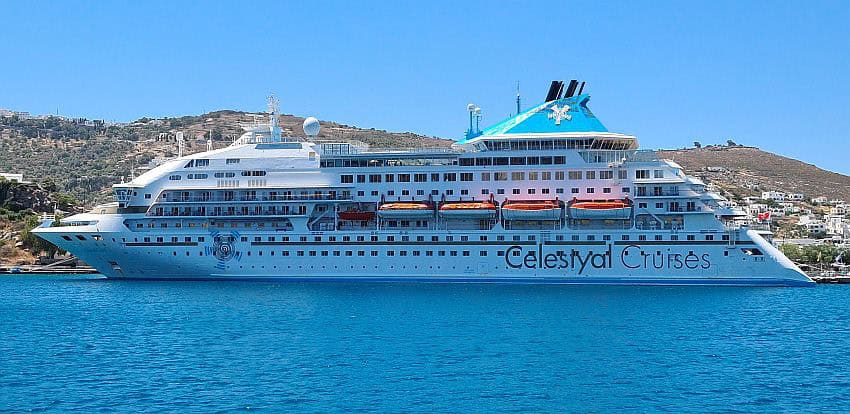
Companies like Celestyal (a regional Greek specialist), Variety Cruises, Star Clippers, and Windstar offer an entirely different philosophy: the destination is the main event, not the ship.
- The Vibe: Intimate, culturally immersive, and relaxed.
- The Pros: Small ships can go where the big ones can’t. They dock directly in the tiny, authentic harbors of lesser-known islands like Paxos, Milos, Symi, or Folegandros. There are no lines to get off the boat. Best of all, small ships often stay in port late into the night or overnight, allowing you to experience the islands’ vibrant nightlife and harbor-side tavernas long after the mega ships have sailed away.
- The Cons: You won’t find water slides, huge casinos, or sprawling buffets here. The entertainment is usually just the sea, the ports, a good book, and a single local musician playing in the lounge after dinner. They are also slightly more susceptible to feeling the motion of the ocean on windy days.
- Estimated Cost: €1,500 – €3,500 per person for a 7-day sailing.
3. The Private Yacht or Catamaran Charter (4 to 12 Passengers)
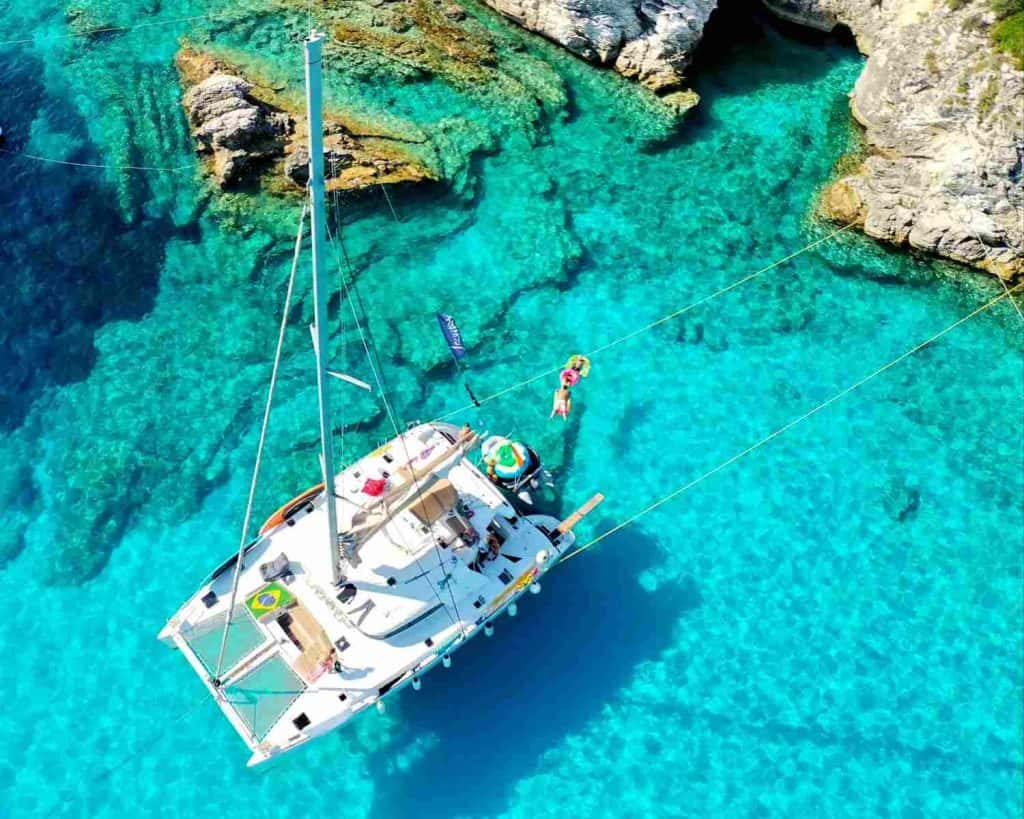
This is the ultimate bucket-list experience. You rent the entire vessel, either “bareboat” (you sail it yourself, requiring a license) or “crewed” (comes with a captain and often a chef).
Small catamarans offer access to secluded swimming coves. Πηγή: photoman / Getty Images
- The Vibe: Total freedom, bespoke luxury, and complete privacy.
- The Pros: The itinerary is entirely up to you. The captain can simply drop anchor in a secluded, unnamed bay, lower a swim platform, and let you jump directly into the turquoise water. You eat breakfast on the deck in your swimsuit and dock in a new village every afternoon.
- The Cons: This is the most expensive option. Living quarters (cabins and bathrooms) are much tighter than on a cruise ship. You are also at the complete mercy of the weather; if the wind is too strong, the captain will not sail, and you may be stuck in port for a day or two.
- Estimated Cost: €4,000 – €12,000+ for the whole boat for a week (divided by the number of people in your group), plus provisioning (food/fuel).
Δημιουργία διαδραστικού οπτικού στοιχείου…Δόμηση κώδικα σε εξέλιξη, μπορεί να διαρκέσει λίγα λεπτά
Navigating the Island Chains: Which Sea Should You Sail?
Greece is not a monolith. The country has over 6,000 islands and islets, divided into distinct geographic chains. Your cruise itinerary will dictate the flavor of your vacation.
The Cyclades (The Iconic Blue & White)
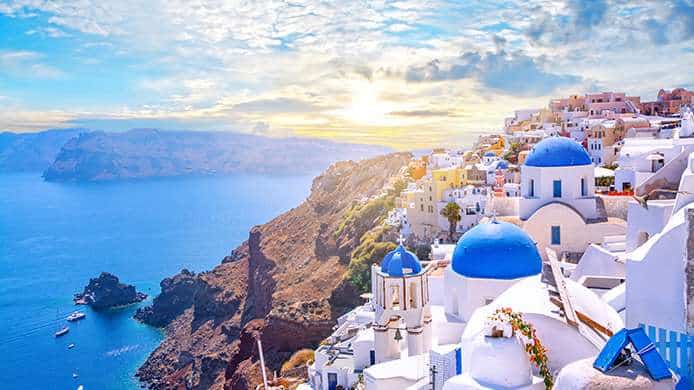
When you close your eyes and picture Greece, you are picturing the Cyclades. Located in the central Aegean Sea, this is the most famous and heavily trafficked cruise route in the country.
The classic blue and white architecture of the Cyclades. Πηγή: Clement LEONARD / Getty Images
- The Vibe: Bare, rugged, volcanic islands topped with dazzling white cubic houses, blue-domed churches, and iconic windmills.
- Key Stops: Santorini, Mykonos, Paros, Naxos, and Milos.
- The Pros: Unbeatable sunsets, world-class nightlife, and incredibly photogenic villages.
- The Cons: Extremely crowded in the summer. Furthermore, the Cyclades are notorious for the Meltemi winds—strong, dry northern winds that blow relentlessly in July and August. If you are prone to seasickness, a small ship in the Cyclades during a Meltemi blow can be a rough ride.
The Ionian (The Lush & Green)
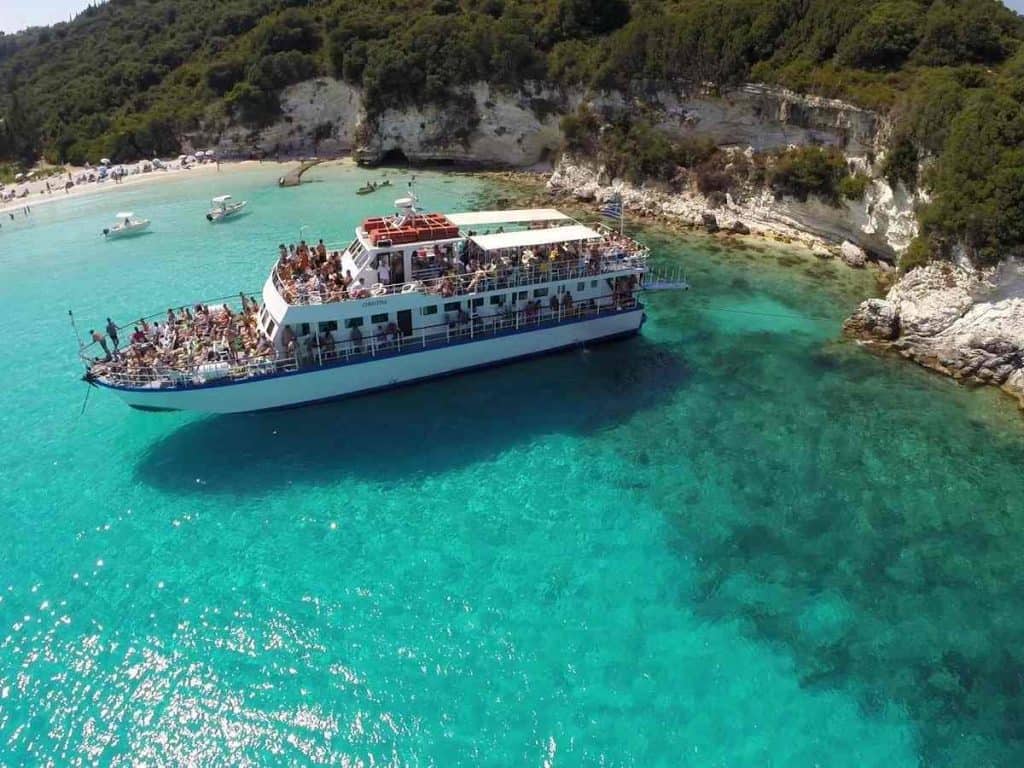
Located on the western side of Greece (closer to Italy), the Ionian islands feel like a completely different country compared to the Cyclades.
The lush, Venetian-influenced coastline of Corfu. Πηγή: Elenakirey / Getty Images
- The Vibe: Characterized by dense pine forests that tumble right down to the sea, pastel-colored Venetian architecture, and some of the most startlingly blue water in the world.
- Key Stops: Corfu, Kefalonia, Zakynthos (home to the famous Navagio Shipwreck beach), and Ithaca.
- The Pros: The waters here are famously calm and protected, making it the absolute best region for private catamaran charters and small ships. The food leans heavily on Italian influence (think rich pastas and local wines).
- The Cons: Fewer iconic “ancient Greek ruins” than the Aegean side, and the season ends slightly earlier due to autumn rains.
The Dodecanese (The Historical Heavyweights)

Tucked right up against the coast of Turkey in the southeastern Aegean, these islands are soaked in history.
The medieval harbor of Rhodes Old Town. Πηγή: milangonda / Getty Images
- The Vibe: A fascinating blend of ancient Greek, Byzantine, medieval Crusader, and Ottoman influences. You’ll find medieval castles, ancient acropolises, and stunning neoclassical architecture.
- Key Stops: Rhodes, Kos, Patmos (where John the Apostle wrote the Book of Revelation), and the wildly colorful harbor of Symi.
- The Pros: Incredible history and architecture. Because they are so far south, the Dodecanese stay incredibly warm much later into the autumn, making them perfect for an October or November cruise.
- The Cons: It requires a longer sailing time from Athens to reach them, meaning mega-ships often only stop at Rhodes and skip the rest.
The 2026 Cruising Economics: The New Port Fees
If you are planning a cruise that stops in Santorini or Mykonos, you need to factor in the country’s new cruise passenger fees, which took full effect recently to combat overtourism.
The Greek government has implemented a tiered tax system for anyone disembarking a cruise ship. While a few luxury all-inclusive lines absorb this cost, the vast majority of mega-ships and standard lines pass it directly to the passenger via your onboard account.
The Premium Tier (Santorini & Mykonos)
To curb the massive influx of day-trippers to its most fragile islands, the fees here are steep.
- Peak Season (June 1 – Sept 30): You will pay €20 per person, per port. (A family of four disembarking at both islands will pay €160 in fees alone).
- Shoulder Season (April, May, October): The fee drops to €12 per person.
- Winter (November – March): The fee falls to just €4 per person.
The Standard Tier (All other Greek ports)
Visiting places like Rhodes, Crete, Corfu, or Milos? The fee is much more manageable to encourage ships to visit these alternative ports.
- Peak Season: €5 per person.
- Winter: €1 per person.
Budgeting Pro Tip: If you want to avoid the €20 fee in Santorini or Mykonos, you can simply choose to stay on the ship! Port days in these mega-hubs are actually the best time to enjoy the ship’s pools, spas, and restaurants completely crowd-free while everyone else is ashore.
Timing is Everything: When to Sail
Greece has a distinct sailing season, and picking the right month is just as important as picking the right ship.
- High Season (July & August): The water is bath-warm, every taverna is open, and the energy is electric. However, this is also when prices peak, crowds are at their maximum, the Meltemi winds are howling in the Cyclades, and temperatures can easily exceed 95°F (35°C), making exploring ancient ruins exhausting.
- Shoulder Season (May to Mid-June, and September to October): This is the sweet spot. The sea is still warm enough for swimming (especially in September), the massive crowds have thinned out, and the temperatures are a comfortable 75°F to 80°F (24°C to 26°C). You also avoid the highest tier of the new port fees.
- Low Season (November to April): Only a handful of mega-ships operate in the winter. The weather is unpredictable, and many island businesses close completely. However, you will have the ruins entirely to yourself, and the prices are rock bottom.
Whether you choose the soaring decks of a mega-ship in Santorini, the quiet bow of a sailboat in the Ionian, or an immersive cultural small-ship journey through the Dodecanese, cruising the Greek islands is a transformative experience.
By understanding the logistics, choosing the right vessel for your travel style, and navigating the new 2026 fee structures, you can ensure your Mediterranean dream trip is smooth sailing from start to finish.
Thanks for reading,
Tasos
About The Author
