Call us at +306949885983

Greece 2–2 Netherlands: A Night of Pride in Thessaloniki and a Huge Step Toward the Nations League Knockout Stage

There are nights when a result feels bigger than the number written on the scoreboard.
Thursday night in Thessaloniki was one of them.
Greece drew 2–2 with the Netherlands at a packed Toumba Stadium in the third matchday of the 2026/27 UEFA Nations League, but for long stretches it looked as though the Galanolefki were going to produce another historic victory.
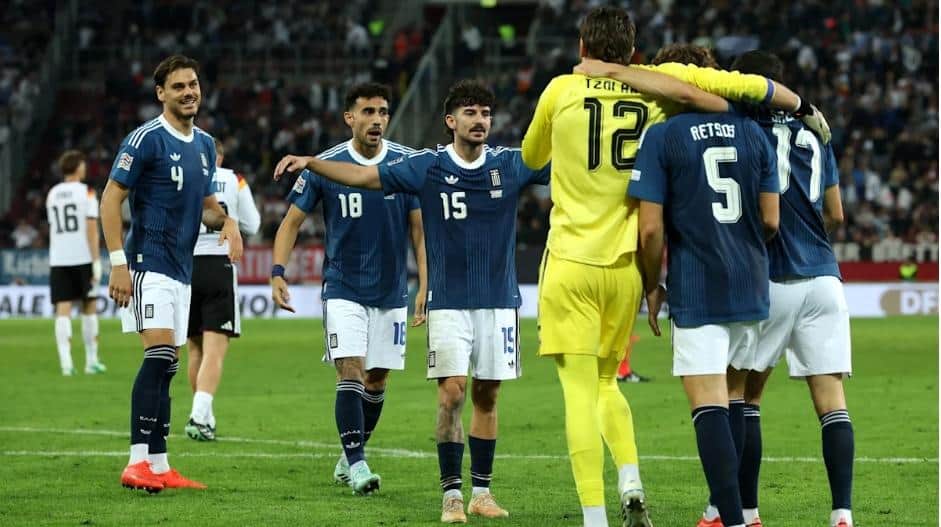
After already beating Serbia 2–1 in Belgrade and Germany 1–0 in Augsburg, Greece went into the night at the top of League A, Group 2. The Netherlands were second. The prize was enormous: not just three points, but a major advantage in the race for the Nations League quarter-finals and, further down the road, an important connection to UEFA EURO 2028 qualification.
And Greece came within minutes of taking all three.
Instead, the Netherlands fought back from 2–0 down to earn a 2–2 draw.
For Greek football, however, this was still a night to be proud of.
Greece Started the Night Like a Team That Believes
The atmosphere inside Toumba said everything before the first whistle.
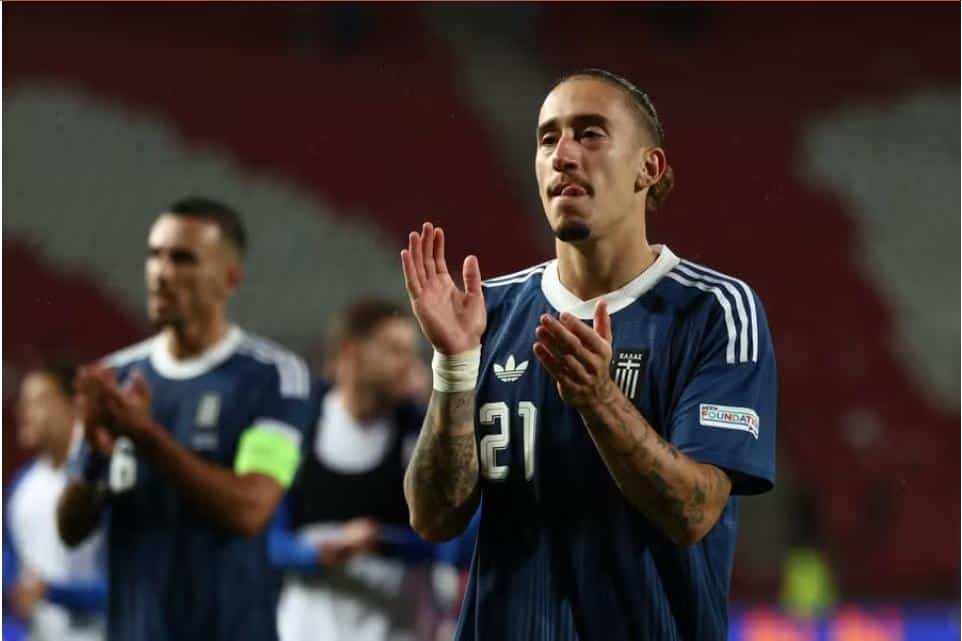
Greece returned home after two consecutive away victories — something that would have sounded extremely ambitious before this Nations League campaign began. The first was a dramatic 2–1 comeback against Serbia. Three days later came something even more historic: Greece defeated Germany 1–0 for the first time in history.
That victory in Augsburg had put Ivan Jovanović’s team alone at the top of the group with six points.
The question before the Netherlands game was whether Greece could handle the pressure of becoming the team everyone was now watching.
The answer, at least for the first half, was emphatic.
Greece played with confidence, discipline and attacking courage.
Fotis Ioannidis opened the scoring in the 23rd minute. After a long ball forward and a clever flick-on, Ioannidis found himself with space and calmly finished beyond Bart Verbruggen. It was the kind of goal that summed up the confidence currently running through this Greek side: direct, intelligent and clinical.
And then came the moment that sent Toumba into another level of celebration.
In stoppage time at the end of the first half, a poor Dutch back pass was punished. Ioannidis collected the ball and squared it perfectly for Giorgos Masouras, who finished from close range.
2–0.
At half-time, Greece had the Netherlands exactly where it wanted them.
Even more impressive was the fact that Christos Tzolis had been forced off early through injury, with Masouras coming on and eventually scoring the second goal.
For 45 minutes, it felt like another unforgettable Greek football night.
The Netherlands Refused to Go Away
But this is the Netherlands.
And a 2–0 lead against a team with players of this quality is never completely safe.
The Dutch made changes at half-time and began to take more control of possession. Greece, naturally, dropped deeper and concentrated on protecting its advantage.
Virgil van Dijk gave the visitors hope in the 59th minute, rising to head home from a corner.
Suddenly, the game changed.
Greece were still ahead, but the Netherlands had momentum.
There was another dramatic moment when Denzel Dumfries appeared to have scored, only for the goal to be overturned following a VAR review. Greece survived again.
But the pressure continued.
And in the 89th minute, Tijjani Reijnders found the equaliser.
From 2–0 up, Greece were suddenly looking at a 2–2 draw.
The final whistle confirmed it.
The Netherlands had recovered, but Greece had still taken another valuable point against one of Europe’s major football nations.
So Where Does This Leave Greece?
This is where tonight’s result becomes particularly interesting.
After three matches, the picture in Group 2 is now:
| Team | Played | Points |
|---|---|---|
| Greece | 3 | 7 |
| Netherlands | 3 | 5 |
| Germany | 3 | 4 |
| Serbia | 3 | 0 |
Germany defeated Serbia 2–0 on the same night, meaning the Germans moved to four points.
Greece therefore remains alone at the top of the group.
And this is not simply about staying in League A.
Under the 2026/27 Nations League format, the winner and runner-up of each League A group qualify for the quarter-finals. The four quarter-final winners then reach the Nations League finals in June 2027.
That means Greece is currently in a position that would take it directly into the knockout stage of the competition.
And just a few months ago, that would have seemed like a dream.
Greece’s Road From Here
There are now three group matches remaining.
Greece vs Germany — 4 October
The next match is already another enormous one.
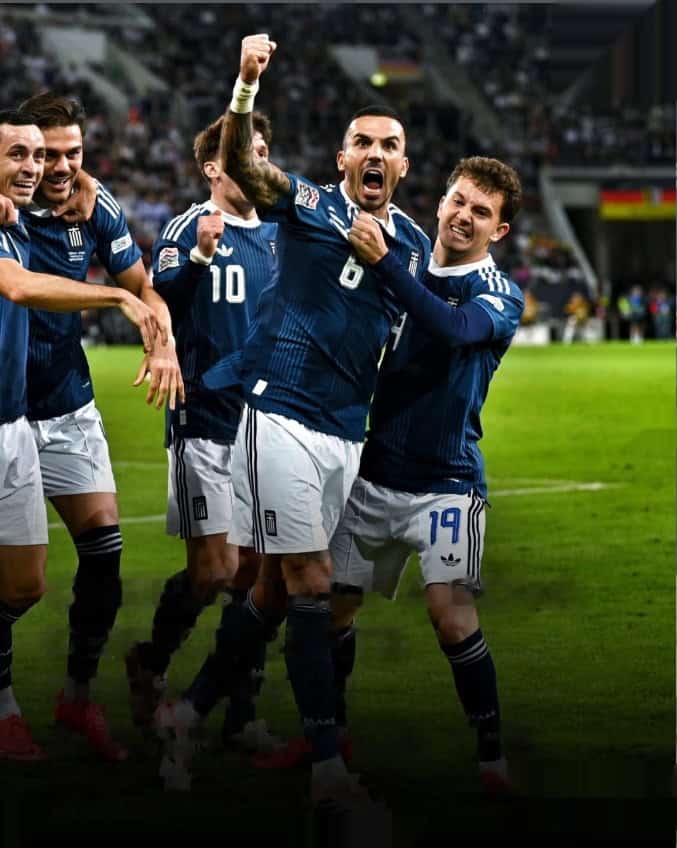
Greece will host Germany at Toumba on Sunday, October 4, at 21:45.
Yes — the same Germany that Greece defeated 1–0 in Augsburg.
This time, however, the Germans will arrive knowing that another defeat could seriously damage their hopes of finishing in the top two.
Greece enters the game with seven points.
A victory would take the Galanolefki to 10 points.
That would put enormous pressure on the Netherlands and Germany because the Netherlands would have only two remaining matches after their meeting with Serbia, while Germany would have two remaining matches as well.
A draw would also keep Greece ahead of Germany and would leave the group very much in Greek hands.
The official schedule confirms Greece–Germany on October 4, followed by the November fixtures.
Netherlands vs Greece — 13 November
Then comes the return match in the Netherlands.
That game could be absolutely fascinating.
Greece will travel to the Netherlands on November 13, with the Dutch now having taken a point in Thessaloniki.
If the standings remain close, that match could become a direct battle for one of the top two positions.
The important thing is that Greece has already secured a valuable advantage: it has taken points from the Netherlands while also beating Germany away from home.
Greece vs Serbia — 16 November
The group phase finishes at home against Serbia.
On paper, Serbia currently sits at the bottom with zero points after three matches. But football has a way of punishing anyone who thinks a match is already won.
The Serbian side opened this campaign by taking Greece to the limit in Belgrade before losing 2–1.
By November, the circumstances could be very different.
The final match may be the game in which Greece either confirms its place in the quarter-finals or has to fight until the last whistle.
The complete remaining schedule is confirmed by the Hellenic Football Federation: Greece host Germany on October 4, travel to the Netherlands on November 13 and finish at home against Serbia on November 16.
What Does Greece Actually Need to Reach the Quarter-Finals?
This is the part Greek supporters should really be watching.
The target is simple:
Finish in the top two.
There is no need to win the group to reach the Nations League quarter-finals. The group winner and runner-up both advance.
And Greece has given itself an excellent starting position.
With seven points from three matches, the Galanolefki are two points ahead of the Netherlands and three ahead of Germany.
The next game against Germany is therefore particularly important.
If Greece beats Germany on October 4, it would reach 10 points.
At that stage, the Netherlands could have a maximum of eight points after their match against Serbia, while Germany could no longer catch Greece in the same way without relying on results elsewhere.
A draw against Germany would take Greece to eight points and would still leave the team in first place, although the race could remain extremely close.
Even a defeat would not automatically end Greece’s hopes. With seven points already collected, Greece would still have two matches remaining — including one at home against Serbia.
In other words, tonight’s draw has given Greece something extremely valuable:
room for error.
That may ultimately prove more important than the two points dropped after leading 2–0.
And What About the “Play-Offs”?
There is an important distinction here.
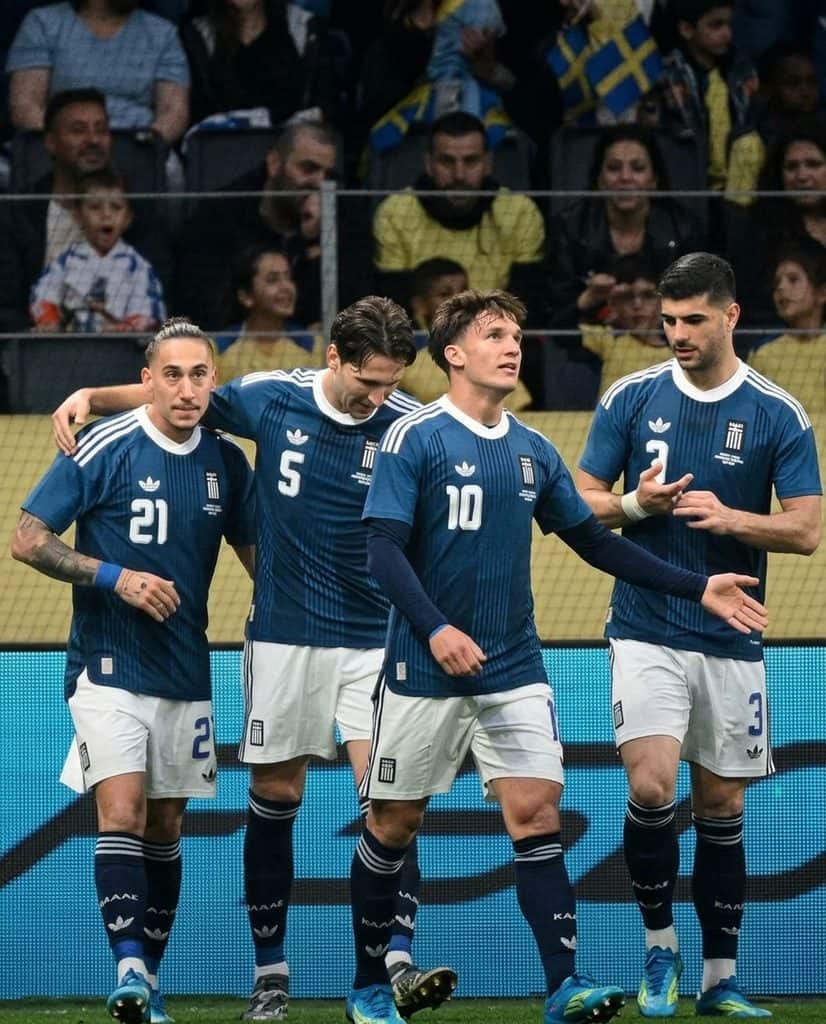
When we talk about the Nations League, Greek fans may hear the word “play-offs” and think about Greece having to fight for qualification to the next stage.
That is not quite how League A works this season.
The top two teams in the group go directly into the League A quarter-finals. Those quarter-finals are played over two legs in March 2027. The group winners are seeded and face runners-up from other League A groups.
So, for Greece, the immediate objective is not a Nations League play-off.
It is the top two.
There are also League A/B play-offs, but those concern teams fighting to remain in League A. The lowest-ranked League A teams enter those ties against League B teams. Greece’s current position means the conversation is much more positive: the team is chasing the quarter-finals rather than trying to escape relegation.
Why the Nations League Matters for EURO 2028
And here is where the story becomes even bigger.
The 2026/27 Nations League is connected to the qualification pathway for EURO 2028.
UEFA’s qualification system gives direct qualification places to the 12 qualifying-group winners and eight best runners-up. Additional places can be decided through play-offs involving remaining qualifying-group runners-up and the best-ranked Nations League group winners who have not already qualified.
So a strong Nations League campaign can give Greece an important safety net.
It does not mean that Greece automatically qualifies for EURO 2028 by finishing first or second in this Nations League group.
But performing well here can potentially provide another route to the European Championship if the traditional qualifying campaign does not deliver direct qualification.
And there is another benefit: the Nations League results are used in the seeding system for the EURO 2028 qualifying draw. UEFA has confirmed that teams will be seeded according to the interim overall 2026/27 Nations League rankings.
That means every point matters.
Tonight’s two points may therefore have significance beyond this particular group.
From Surviving to Competing
Perhaps the most encouraging part of this Greek campaign is the change in expectations.
When Greece returned to League A, the first objective was naturally to remain there.
The Hellenic Football Federation itself described the opening victories over Serbia and Germany as an ideal start and noted that the team could now look beyond the initial objective of simply securing League A status.
Now the conversation has changed.
Greece is looking at the quarter-finals.
Greece is looking at the possibility of competing against Europe’s best teams in knockout football.
And Greece is thinking about EURO 2028.
That is a very different conversation from the one we were having before September.
A Night to Be Proud Of
Yes, there will be some disappointment.
When you lead the Netherlands 2–0 at home, with the stadium shaking and only a few minutes separating you from another famous victory, conceding twice hurts.
But there is another way to look at it.
Greece has now played three matches in the strongest tier of the Nations League.
It has won in Serbia.
It has beaten Germany in Germany.
And it has led the Netherlands 2–0 before eventually drawing 2–2.
The Galanolefki have seven points.
They are first.
And they have three matches left to finish the job.
There is still a long way to go. The Netherlands are only two points behind. Germany are only three points behind. Nothing is guaranteed.
But for the first time in a long time, Greek football supporters can look at a group containing Germany and the Netherlands and genuinely believe that Greece belongs at the table.
That is perhaps the biggest result of all.
The road continues on Sunday.
Greece vs Germany. Toumba again.
And after everything that has happened over these first three games, one thing is certain:
The Galanolefki are no longer simply trying to survive among Europe’s elite.
We are there to compete.
And now, we wait for the next night.
Πάμε Ελλάδα. 🇬🇷💙
About The Author
