Call us at +306949885983

Cyprus Wildfires: devastation within the last 24 hours (updated 24 July 2025)

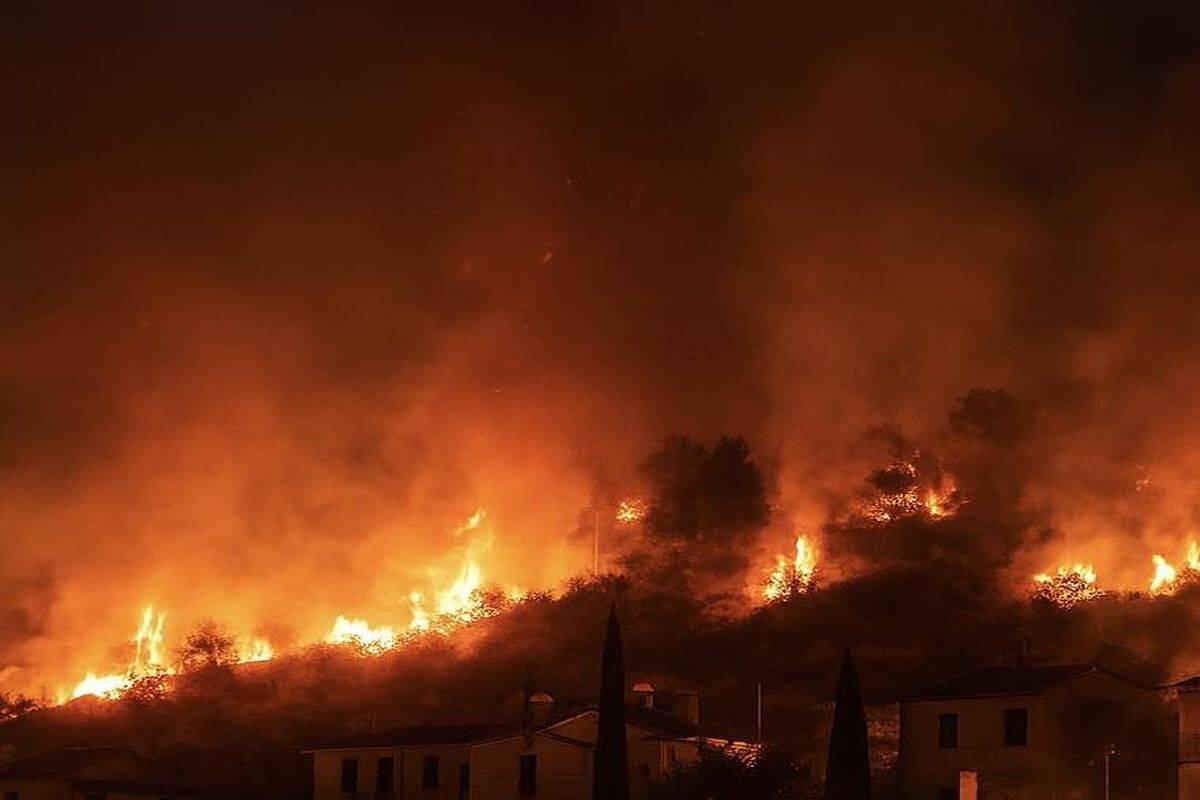
A tinder‑dry island faces the worst blaze in half a century
Cyprus is the third‑largest island in the Mediterranean and is known for its sun‑drenched coastlines and mountainous interior. A prolonged drought has left vegetation parched and reservoirs critically low.
The Kouris reservoir — the island’s largest source of fresh water — was at only 15.5 % of capacity on Wednesday, underscoring how little moisture was available to slow the spread of flames.
When a series of fires ignited around midday on Wednesday 23 July in the wine‑producing hills north of Limassol, hot, dry winds quickly drove them out of control.
The scale of the disaster
By Thursday morning (24 July) the fires had blackened an estimated 100 square kilometres of land, destroying vineyards, olive groves and pine forests across a 14 km belt of mountainous terrain.
To put this into perspective, Euronews notes that the blaze has consumed roughly 1 % of Cyprus’s land area and is the largest wildfire on the island since the Turkish invasion in 1974. Along the main road between hillside villages, police discovered a burned‑out vehicle containing two victims, bringing a tragic human toll to the disaster.
\At least 10 people were injured, two of them seriously. Dozens of houses in villages such as Lofou were destroyed and hundreds of residents were forced to evacuate.
Weather and environmental conditions
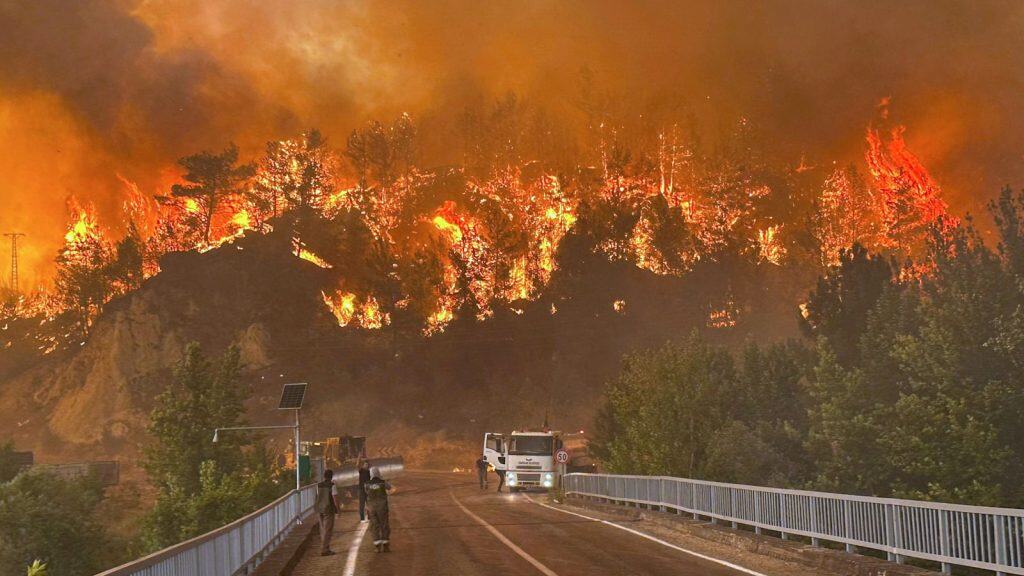
The flames were fanned by gusty winds that repeatedly shifted direction.
Temperatures reached 43 °C on Wednesday and were forecast to hit 44 °C on Thursday—Cyprus’s hottest day of the year—prompting an amber alert for extreme heat.
The heat wave followed three consecutive arid winters and has left the countryside exceptionally dry.
The heat and drought create a feedback loop: dry vegetation ignites more easily, and the resulting fires release additional heat and smoke into the atmosphere.
Emergency response
Mobilising local and regional resources
Firefighters began battling the flames soon after the first call. Cyprus deployed over 250 firefighters and at least 14 aircraft to the fire zone.
A red hue settled over Limassol as water‑bombing helicopters and planes dropped hundreds of tonnes of water on the flames. Although crews were able to slow some fronts, the blaze remained “out of control” on Thursday and fresh fires broke out in the Paphos district later that afternoon.
International aid
Cyprus requested assistance through the European Union’s Civil Protection Mechanism.
Spain agreed to dispatch two amphibious Canadair planes, Jordan sent helicopters and a British RAF Chinook based on the island joined the effort.
Israel announced it would send firefighting aircraft on Thursday evening. Additional water‑bombers from the EU were placed on standby as authorities warned that strong winds could reignite fire fronts.
Investigations and causes
Authorities have not determined the exact cause of the fires.
Fire service spokesman Andreas Kettis told state media that eye‑witnesses reported seeing two ignition points at a landfill only 100 m apart, raising suspicions of arson.
However, officials also pointed to the combination of record heat, strong winds and prolonged drought as key factors that allowed the flames to spread rapidly. Local leaders rejected suggestions that emergency plans had been neglected, saying that all protocols were activated from the outset.
Historical context
Wildfires are not new to Cyprus, but the scale and intensity of this blaze are unprecedented in recent decades. The last comparable fire occurred in 1974 during the island’s invasion, when about 260 square kilometres burned. More recently, in 2021, a wildfire in Cyprus killed four Egyptian men. Climate scientists warn that rising temperatures and increasingly frequent heat waves in the eastern Mediterranean make such megafires more likely. The extreme conditions are similar to heat‑driven fires currently affecting neighbouring Turkey and Greece.
Life on the island amid the flames
Cyprus is a popular tourist destination, known for its beaches, archaeological sites and mountain villages. The fires have cast a pall over these idyllic settings.
Villages such as Souni and Lofou were enveloped in smoke, with video footage showing trees and houses consumed by flames. Children at a summer camp near Lofou were evacuated as a precaution. The government set up shelters for displaced residents and urged people to follow evacuation orders.
Beyond the immediate destruction, there are growing concerns about the long‑term ecological impact. The affected area includes vineyards and forests that support biodiversity and local livelihoods.
Burned soils are more vulnerable to erosion, and the loss of vegetation can reduce water retention, exacerbating drought conditions. Replanting and recovery efforts are likely to take years.
Looking ahead
The fires highlight Cyprus’s vulnerability to extreme weather events and the urgency of climate adaptation. As temperatures in the eastern Mediterranean continue to rise, managing forests, reducing ignition sources and improving emergency preparedness will become increasingly important.
For now, firefighters and volunteers continue their battle against the flames, supported by aircraft from across Europe and the Middle East. The hope is that cooler weather or a change in the wind will provide the break crews need to finally gain control and prevent further tragedy.
About The Author
