Call us at +306949885983

How Was Santorini Formed By 4 Volcanoes (video)

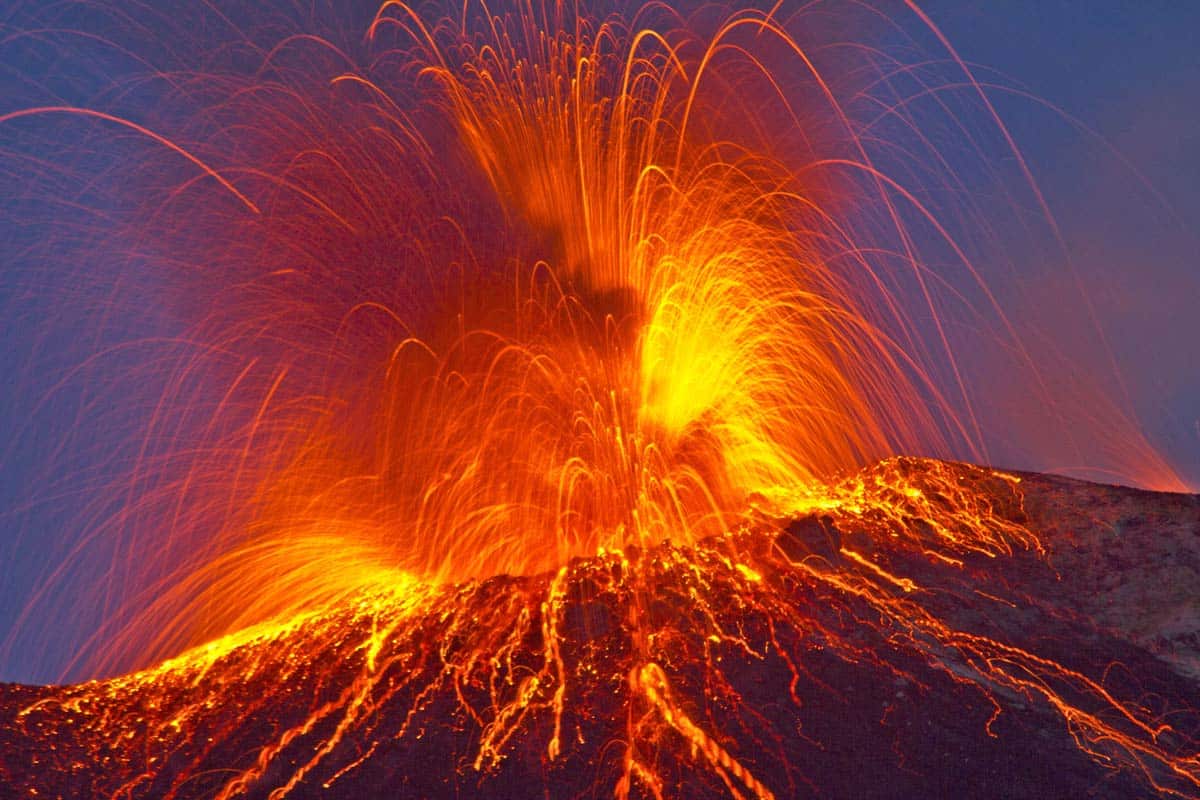
What you see in Santorini is not the work of one volcanic outburst. It is, in fact, the sum of four distinct and overlapping volcanic centers. For hundreds of thousands of years, a series of shield volcanoes were put in place by way of repeated activity.
In time, each would be undone by a cataclysm: the magma chamber would run dry and the volcano would give way to a caldera. The timeline of it is as follows:
Some 180,000 years back, the southern caldera was made. That was the first.
Around 70,000 years later came the Skaros.
The Cape Riva was next, some 21,000 years ago.
And then there was the Minoan eruption, 3,600 years or so in the past, which left us with the caldera we have today.
The landscape has been put through its paces with every new eruption. Where one volcano gave way to another, the terrain was remade into the singular, crescent-shaped archipelago of today, the central caldera of which is home to the more recent Nea and Palea Kameni.
Underlying all of this is the subduction of the African Plate under the Aegean, the force that has given Santorini its striking geology. One would be hard-pressed to point to a single event as the island’s origin; it is the sum of four major, interwoven volcanic centers. For hundreds of thousands of years, individual shield volcanoes were put in place by round after round of eruptions, until, in some cases, a cataclysm would see the magma chamber run dry and the edifice give way to a caldera.
To be more precise:
The first to appear was the southern caldera, some 180,000 years back. The Skaros caldera is younger, having come into being 70,000 or so years ago. Then there is the Cape Riva, which dates to 21,000 years ago. And in the end, it was the Minoan eruption 3,600 years ago that put in place the caldera as we see it today.
One after another, the eruptions have put their mark on the terrain. Where the volcanoes have come to lie on top of one another, they have given the island chain its characteristic crescent form. In the middle of it all, the caldera is home to the more recent arrivals, Nea and Palea Kameni. It is this kind of activity, with the African Plate being forced under the Aegean, that has made for the striking geology of Santorini.
About The Author
