Call us at +306949885983

Local Ouzo vs. Greek Wine: What to Drink (And When) While Traveling in Greece


There is one thing you will not miss in Greece: a table without a tale, and it all starts with what’s in your glass. You might be toasting with the sea in front of you or having a quiet one with some of the locals in a mountain hamlet, but in either case, the drink is more than that.
It is the whole point of being there.
Ouzo and Greek wine are staples you will find in most places. Yet for all their ubiquity, they are not the same. They have different roots, different tastes, and their own time and place.
We put together this side-by-side to make it easy to pick the one that fits the occasion on your travels.
🍇 Greek Wine: A Taste of the Land
What is it?

There is a long history to Greek wine, one that can be traced back millennia. The country’s 300-odd native grape varieties put together a broad spectrum of vintages: you will find everything from a clean white to a full-bodied red, as well as some fine rosés and dessert options.
Here are a few of the better-known ones:
Assyrtiko – A dry, no-nonsense white hailing from Santorini.
Moschofilero – For a more floral note, this is the white of choice in the Peloponnese.
Xinomavro – An earthy, forceful red out of the north.
Agiorgitiko – On the milder side, with a fruitiness that has some putting it in the same class as Merlot.
Vinsanto – A luscious sweet made from grapes left to dry in the sun.
Best enjoyed:
- At lunch or dinner, especially with food.
- In a taverna or winery during a wine-tasting tour.
- On cooler days when a red wine hits just right.
Why choose wine:
There is a certain pleasure in having the right glass to go with what’s on your plate.
An interest in Greek terroir is not hard to come by; after all, a good number of these vintages are put down in volcanic or high-altitude ground.
And when it comes to sipping, one prefers to take their time and be a bit more discerning.
A word to the wise: at a taverna, ask for the local wine by the carafe or the kilo. It is as a rule an easy price for something made in-house that will do a fine job with the food.
🥃 Ouzo: Greece in a Glass
What is it?
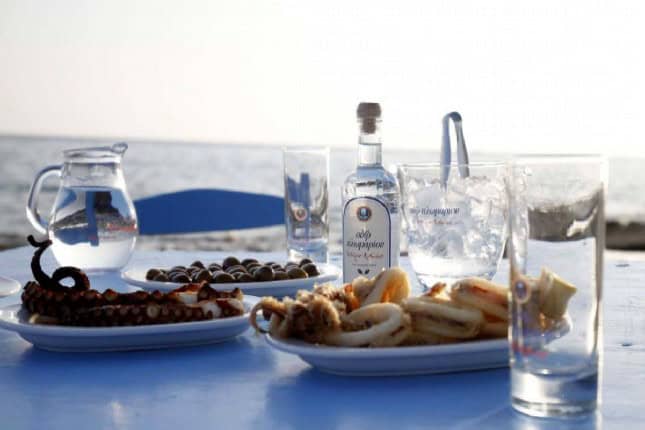
There is a certain character to ouzo, a potent aniseed spirit. You’ll find it made from the distillation of what’s left over from the grapes—tsipouro being one example—and then given its profile with anise and on occasion fennel or mastiha. Pour it over some ice or add a bit of water and it will opaquely turn white.
By the numbers:
Alcohol: 37.5–40%
Taste: Aromatic and very much in the vein of Greek licorice
How it’s had: Straight up, with ice, or with cold water to cut i
Best enjoyed:
- Before a meal as an aperitif.
- In small villages by the sea with a table full of meze.
- On a hot afternoon while nibbling on olives, grilled octopus, or cheese.
Why choose ouzo:
- You want the classic Greek experience—locals sip ouzo slowly while chatting for hours.
- You’re enjoying a long, relaxed lunch by the water.
- You’re eating meze and want something strong but refreshing to go with it.
✅ Pro tip: Ouzo isn’t for shots. Sip it slowly and eat while drinking. Never drink ouzo on an empty stomach!
🔍 Ouzo vs. Greek Wine – Side-by-Side Comparison
| Feature | Ouzo | Greek Wine |
|---|---|---|
| Type | Distilled spirit (like absinthe) | Fermented beverage from grapes |
| Alcohol | ~40% ABV | 11–14% ABV |
| Flavor Profile | Anise/licorice, herbal | Wide range: fruity, earthy, dry |
| How It’s Served | With water/ice & meze | In glasses, paired with meals |
| Best With | Meze, seafood, olives, cheeses | Full meals, grilled meats, pasta |
| Where to Try | Small tavernas, island cafes | Wineries, restaurants, wine bars |
| Social Style | Leisurely sipping, casual hangouts | Mealtime focus, wine tastings |
| Price Range | Very affordable (by glass/carafe) | Ranges from cheap to fine dining |
🎯 When to Choose Each (Real Travel Scenarios)
You’re sitting by the sea with small plates of grilled squid and feta…
➡️ Go with ouzo. It’s the iconic pairing for seafood meze, especially in the islands or near the port.
You’re at a mountain taverna in the Peloponnese eating lamb and potatoes…
➡️ Order a local red wine like Agiorgitiko. It complements rich, hearty dishes perfectly.
You’re visiting Santorini and touring wineries…
➡️ Try Assyrtiko, the island’s signature crisp white wine, grown in volcanic soil.
You’re out at a beach bar in Naxos at sunset…
➡️ A chilled rosé or light white wine is perfect—refreshing but elegant.
You’re having a midday snack of olives, bread, and cheese in a village square…
➡️ Ouzo wins again. Just a small glass, a few bites, and a lot of atmosphere.
🇬🇷 Local Customs: How Greeks Actually Drink Them
- Greeks don’t drink heavily—they sip slowly and always with food.
- Ouzo is a social drink—shared in rounds with friends, especially in casual settings.
- Wine is for meals and celebrations, but also common at family dinners.
- Many Greeks have a preferred island or region for their wine or ouzo—ask locals for tips!
✅ Fun fact: In places like Lesvos (the “home of ouzo”), you’ll find dozens of small distilleries, each with its own twist on the recipe.
🧭 Where to Try Them While Traveling in Greece
Best Places for Ouzo:
- Plomari (Lesvos Island) – Famous for its ouzo distilleries
- Chios – Try local ouzo with mastiha influence
- Tavernas in small fishing villages – Look for “ouzeri” spots
Best Places for Greek Wine:
- Santorini – World-famous for Assyrtiko
- Naoussa – Known for bold Xinomavro reds
- Crete – Try Vidiano, Liatiko, and other native varietals
- Nemea (Peloponnese) – Agiorgitiko’s home turf
Many wineries offer affordable tastings—often with cheese, olives, and unforgettable views.
🏆 Final Thoughts: Which One Should You Choose?
Honestly? Try both.
There is no rivalry between ouzo and a good Greek wine; they simply have their own time. It comes down to the hour, what you are having for food, and where you are. Ouzo is for when you want to put your feet up and have a conversation. Wine is for the table, to be had with a proper meal.
And in any corner of Greece you make your way to, you will come across the local take on both. Sampling them is as much a part of being here as anything else.
Yamas! (Cheers!)
About The Author
