Call us at +306949885983

Top 10 Things to Do in Crete: A Complete Guide to Enjoying Greece’s Largest Island

More than the biggest of the Greek isles, Crete is a destination with as much character as it has size.
It is hard to find a more well-rounded spot in the Mediterranean: you have your antiquities and some of the best beaches, not to mention the contrast between lively towns and remote mountain hamlets.
For those with an interest in the past, good food, or a day on the trail, we have put together a list of 10 must-see experiences on the island.
1. Explore the Palace of Knossos: The Heart of Minoan Civilization

You won’t want to miss the Palace of Knossos, not far from Heraklion. It is home to the remains of the Minoans, Europe’s first true civilization.
What to look for: the frescoes, the maze-like grounds and, of course, the legends of King Minos and his Minotaur.
Our advice is to get there in the morning; it is a way to beat the heat and the other visitors. If you can, put in for a guide to make the most of it.
2. Hike the Samaria Gorge: Europe’s Longest Gorge Hike

For those with an appetite for the outdoors, the 16-km trek through Samaria Gorge in the southwest of Crete is not to be overlooked. One can expect a very fine day of it, with some of the scenery being nothing short of spectacular.
What to see: The kind of towering cliffs and “Iron Gates” that put on a show, as well as the local kri-kri goats.
When to plan it: Anywhere from May to October.
How long it takes: Figure on 5 to 7 hours to make your way to Agia Roumeli.
3. Relax on Elafonissi Beach: Pink Sand Paradise

Few can argue with the beauty of Elafonissi Beach; the combination of its pink-hued sand and the turquoise water is why it makes the list of top beaches in the world.
It is a good spot for the whole family, as there are shallow lagoons where children can be.
A few things to have on hand: some form of sun protection, and if you plan to wade in the rockier parts, a pair of water shoes. It is also wise to have cash for any beach chairs or a bite to eat.
4. Stroll Through Chania Old Town: Venetian Charm and Seaside Cafes

There is a certain romance to Chania’s Old Town, with its mix of Venetian, Ottoman and Greek influences. One can meander the tight lanes, put in an appearance at some of the local maker’s shops and take in what the harbor has to offer.
Of particular note are the Egyptian lighthouse, the Maritime Museum and the tannery row on Skridlof. For the right kind of evening, head out around sunset; it is ideal for some good light and a meal by the water.
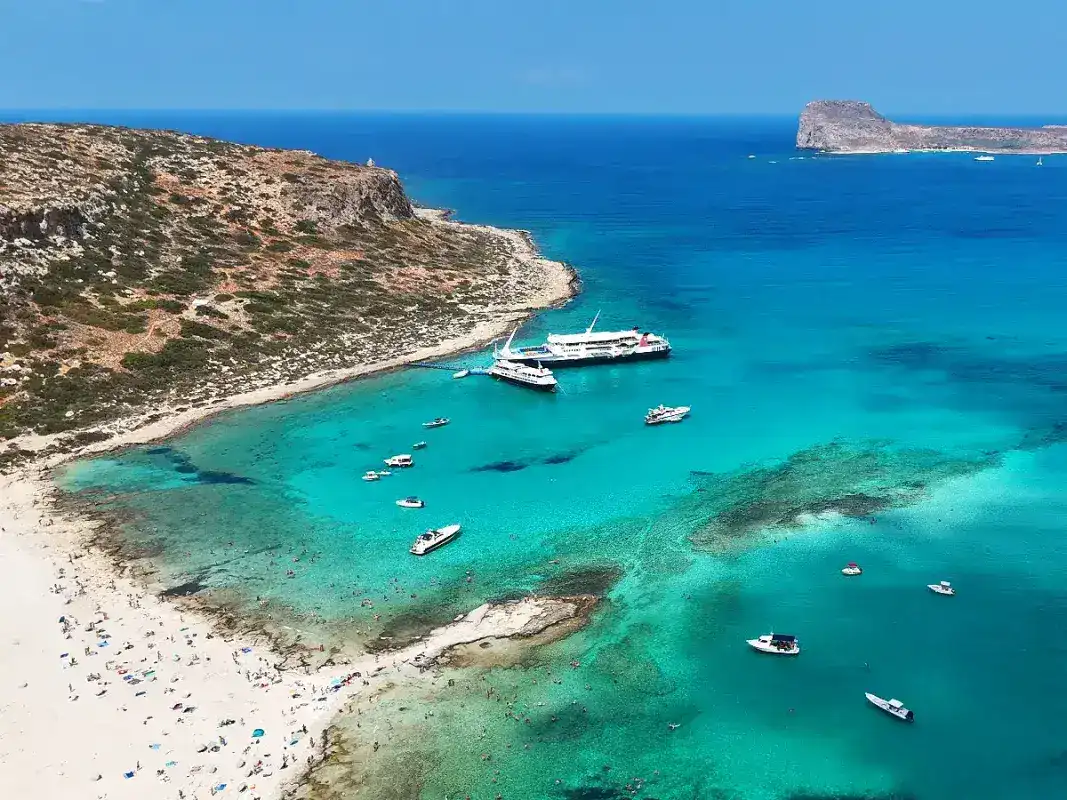
5. Visit Balos Lagoon: One of the Most Photographed Spots in Greece

Balos is where Caribbean colors meet rugged Cretan nature. It’s accessible by boat or a scenic (but rough) hike.
- Tip: Rent a 4×4 or book a boat from Kissamos
- What You’ll Love: Crystal-clear waters, wild scenery, view from above the trail
6. Dive into Cretan Cuisine: Fresh, Local, and Flavorful

There is no better way to put it: Cretan cuisine is as good for you as it is on the palate. You will find a food culture here that is unpretentious, in season and, above all, a matter of tradition.
Some of the highlights include:
- Dakos – a barley rusk topped with tomatoes, feta and olive oil
- Lamb with stamnagathi (wild greens)
- Kalitsounia – cheese pies that can be made either way
For a full immersion, put in an appearance at a cooking class in one of the mountain villages.
7. Discover Rethymno’s Old Town: History Meets a Laid-back Vibe

Rethymno is smaller than Chania but equally charming, with narrow streets, arched doorways, and a Venetian fortress.
- Activities: Explore the Fortezza, sip coffee at hidden cafes, browse local art
- Perfect For: Couples, slow travelers, photographers
8. Swim in Seitan Limania: A Hidden Cove with Dramatic Cliffs

This narrow, zigzagging cove near Chania is visually stunning and Instagram-famous.
- Be Aware: The path down is steep—wear good shoes
- Best Time to Go: Early morning or late afternoon to avoid crowds
9. Visit the Arkadi Monastery: A Symbol of Cretan Resistance

You will find more than just beauty in this 16th-century monastery in the Rethymno area; it is a place of some historical weight, with ties to the Cretan uprising against the Ottomans.
A trip here is well worth it for the fine architecture and the quiet of the gardens, not to mention the cultural resonance of the site.
Admission is on the order of €3 to €5. Do come prepared in modest attire—shoulders and knees should be covered.
10. Explore Lasithi Plateau and the Cave of Zeus (Dikteon Cave)

You will find the Lasithi Plateau to be a landscape of windmills and old-world villages, not to mention the fabled spot where Zeus was born.
What to see: Dikteon Cave, the village of Psychro, and some of the better tavernas in the area.
A note on the cave: it has a lot of history to it, with some fine stalactites for good measure.
Bonus Tips for Visiting Crete
When to go: The months of May and June, or from September through October, are ideal for good weather and to avoid the hordes.
Getting around: A rental car is the way to go if one wants some freedom of movement.
A word on manners: Show due respect in any church or monastery you come across. And a cordial “Kalimera!” to the shopkeeper is never out of place.
Final Thoughts
There is no shortage of what to see in Crete, from its sun-drenched coasts and enigmatic ruins to the life in its towns and the unvarnished charm of the mountain hamlets. This guide is put together to help you have a bit of both: some down time and some exploration, a measure of culture and a good deal of the outdoors. In short, it is here to make a visit to the island one you will not soon forget.
About The Author
