Call us at +306949885983

Poland Deploys Military Forces to Protect Its Borders

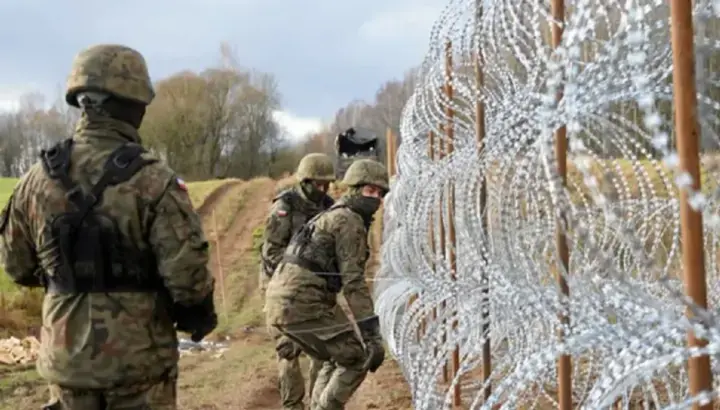
Poland has increasingly relied on military personnel and security infrastructure to strengthen its borders, particularly along its eastern frontier. The country’s approach has brought renewed attention to a question being debated across the Atlantic: should the United States also rely more heavily on military forces to secure its borders, or can civilian border agencies handle the challenge on their own?
For supporters of tougher border enforcement, Poland illustrates the importance of treating border security as a national security priority. Others argue that military involvement should remain limited and that immigration enforcement is best handled by specialized civilian agencies operating under established legal safeguards.
The debate involves more than the number of personnel stationed along a border. It raises questions about national sovereignty, illegal crossings, public safety, government spending, and the appropriate role of the military in domestic affairs.
Why Poland Has Strengthened Its Borders
Poland occupies a strategically important position in Central Europe, sharing borders with Belarus, Ukraine, Russia’s Kaliningrad exclave, Germany, the Czech Republic, Slovakia, and Lithuania. Its eastern borders have become particularly significant amid Russia’s war against Ukraine and tensions between European governments and Belarus.
In recent years, Poland has strengthened its eastern frontier through physical barriers, surveillance technology, additional border personnel, and military support. The situation along the border with Belarus has been especially contentious, following a sharp increase in attempted crossings beginning in 2021.
Polish and European officials have accused Belarus of facilitating the movement of migrants toward the European Union’s external borders as a way of applying political pressure. Belarusian authorities have disputed aspects of Western governments’ accounts.
The resulting crisis placed Poland at the center of a wider European debate over migration, security, and the use of people crossing borders as instruments of geopolitical pressure.
Poland responded by reinforcing its border defenses and deploying military personnel to support the Border Guard, the country’s principal civilian border enforcement service.
The distinction matters. Military personnel can provide additional manpower, logistics, surveillance, and protection, while civilian officers retain specialized responsibilities involving border checks, immigration procedures, and enforcement of applicable laws.
What Military Deployment Can Accomplish
A military presence can provide capabilities that ordinary border agencies may struggle to supply quickly during periods of intense pressure.
Armed forces have access to logistical resources, engineering equipment, surveillance systems, transport, and personnel trained to operate in difficult environments. These capabilities can help governments monitor remote stretches of territory, maintain physical barriers, and respond to emergencies.
Military engineers can also assist with constructing or reinforcing border infrastructure. Additional personnel can support patrols, observation posts, and other security operations, depending on the legal framework governing their deployment.
For Poland, these measures form part of a broader effort to protect its territory and manage pressure along its eastern frontier.
However, military deployment does not automatically eliminate illegal crossings. People may attempt to cross through forests, rivers, remote terrain, or gaps in physical barriers. Effective border management also depends on intelligence, cooperation between agencies, identification procedures, and the ability to process people who reach the border.
The practical question is therefore not simply whether soldiers should be present. It is what responsibilities they should perform, under whose authority, and with what safeguards.
The United States Faces a Different Border Situation
The American debate concerns a country with a different geography, legal framework, and border management system.
The United States shares a southern land border with Mexico and a northern border with Canada. Its southern frontier has been the focus of intense political disagreement over unauthorized crossings, asylum applications, drug trafficking, human smuggling, and the resources required to manage migration.
The principal civilian agencies responsible for border enforcement operate within the Department of Homeland Security. U.S. Customs and Border Protection manages border inspection and enforcement, while U.S. Border Patrol focuses on preventing unauthorized entry between official ports of entry.
These agencies already operate with significant personnel, surveillance technology, vehicles, aircraft, and other specialized equipment. The United States also has a long history of deploying National Guard personnel and active-duty military forces in support of border operations.
Consequently, the policy question is not whether the American military has any role at the border. It is how extensive that role should be and which responsibilities should remain with civilian authorities.
Supporters of additional military involvement argue that the armed forces could provide extra manpower, improve surveillance, strengthen infrastructure, and relieve pressure on civilian officers. Critics question whether a larger military presence would address the underlying causes of unauthorized migration and whether its costs would justify the additional capabilities.
About The Author
