Call us at +306949885983

10 Things That Shock First-Time Visitors to Greece (That Greeks Find Completely Normal)

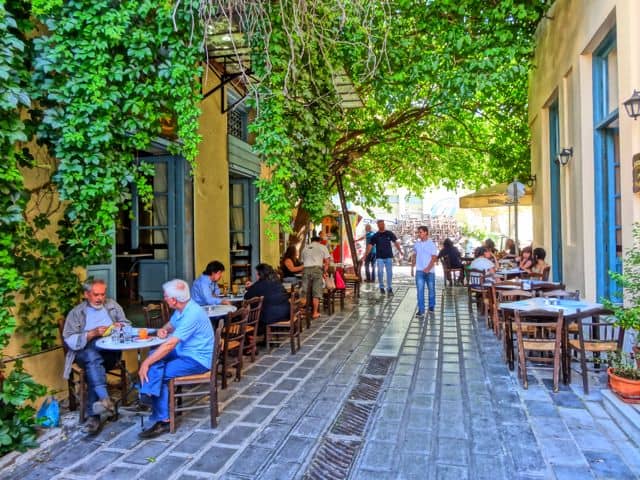
When you get to Greece, you have an idea of what to put in front of you: the sun, some old ruins and perhaps the finest food you have ever had.
You do not, however, anticipate being given your menu at 9:30pm, or for a total stranger to put something in front of you that you never ordered.
Nor do you expect to find out why there is a wastebasket by the toilet. But these are not oddities; they are part of the fabric of the place. Put some thought into it and the confusion gives way to a kind of unhurried, ouzo-scented logic.
What follows are ten of those things that will catch you unawares but are utterly unremarkable to any Greek.
What the travel guides don’t tell you
1. Dinner is a late affair
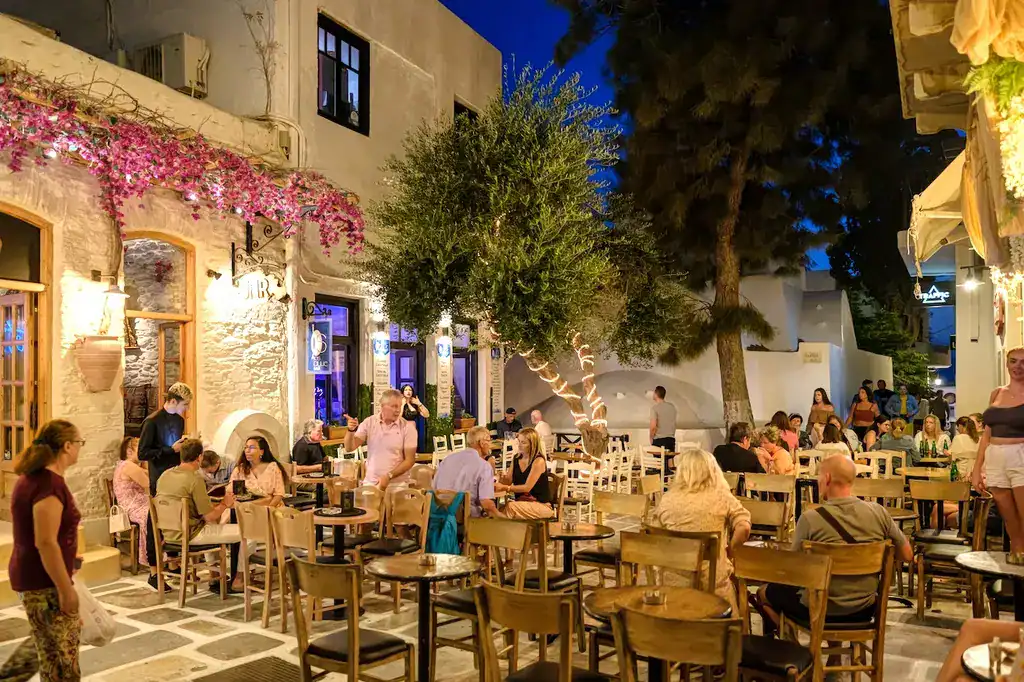
Try going to a restaurant at 7pm and you will see waiters with a cloth in hand and a kitchen still coming to life.
Greeks like to eat late, and properly so.
Anything before 9 is for the tourists.
Give it until 10 and the room is full; on a weekend you won’t see tables turn over till after midnight and no one bats an eye.
It makes sense when you consider the heat of a summer afternoon. The day’s rhythm changes and the main event is left to the cooler evening. It is supposed to be a long meal with hours of conversation.
Don’t expect to be rushed for payment either. The bill comes when you ask for it, if at all. And if you sit down and are left to your own devices for a quarter of an hour, take it as the pace of things rather than poor service.
2. Put the paper in the bin

You will come across this in most Greek bathrooms, from the smaller islands to the older buildings in a village. There is a small bin beside the toilet for a reason.
The plumbing in much of the older infrastructure has narrower pipes than you are accustomed to and flushing the paper will clog them.
The signs are not open to interpretation.
A Greek has done it since he was a child and thinks nothing of it; by day two you will be in the habit too.
3. The evil eye is more than a trinket
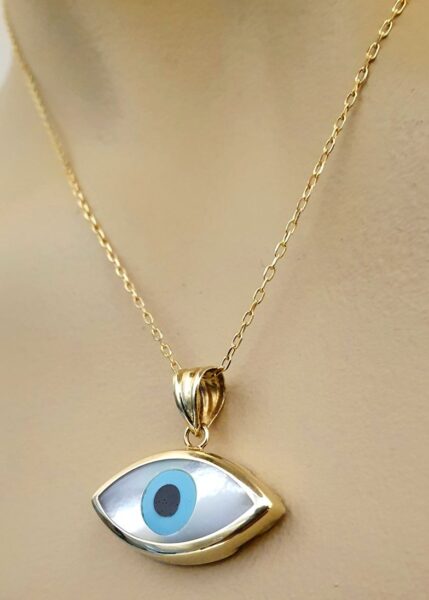
The mati, or blue glass eye, is everywhere – on car mirrors, in shop fronts, on a baby’s clothes.
A visitor might pick one up as a nice memento but to many here it is active protection. The thinking is that too much admiration can be harmful, and the blue eye turns it away.
If you have been the recipient of an over-enthusiastic compliment and then something goes awry, your host’s grandmother will know the cause and have a prayer for it. This is not just country folklore.
A word to the wise: should you want to praise a Greek’s child, make sure to add a soft “ftou ftou ftou” afterwards. It is a little spitting sound to ward off the evil eye and they will appreciate it.
4. Be aware of “Greek Time”

Say you are to meet at 7pm and show up at half past; odds are you will be the first to arrive.
There is a different relationship with time here, born of social custom rather than any lack of respect.
When a Greek says he will be there in five minutes, plan for twenty or thirty. An event listed for 9 means the DJ doesn’t start until 11. Leave the watch at home and you will have a better time of it.
5. Your coffee is an excuse

Have a freddo espresso or a frappé and you have secured the afternoon.
The café is where life is processed, where deals and arguments are had. It is not a place to stop and go.
The waiter will not be standing over you and no one is going to see you out in 20 minutes.
You may have ordered a coffee but that was incidental.
6. Midday means closed
Make your way to a shop at 3pm and you could well be met with a note and a shutter.
You will find the afternoon siesta is no less in force well past the main tourist hubs. From about 2 until half five, Greece shuts down for the heat and means to do so.
It is best to get your errands done in the morning and save the swimming for later; put off any shopping or socialising till the evening when things come back to life at 5-6pm and don’t let up for hours.
This is 100% it vastly depends where you are. Probably the shops in the islands stay open for longer because their season is just summer time. While in the mainland it is more common for shops to close for a midday rest and they reopen at about 5 or 6 pm
7. A Slight Head Tilt Backward Is a “No”
Do not be taken in by it. Put a yes or no question to a Greek and you may see the head go back and up a fraction, perhaps with an eyebrow or a soft “tsk”. It is easy to mistake for someone mulling over an answer, but it is not.
The answer is no. And then there is the matter of the slow blink or a small downward nod for a “yes”, which can seem equivocal to an outsider.
Be very attentive when you are confirming a booking or ferry time, or you could find yourself striding off in the wrong direction with complete confidence.
8. Name Days Trump Birthdays

In the Greek Orthodox calendar, nearly every day has a saint’s name attached to it. Should your name be that of the day’s saint, the day is yours.
Giorgos has his on April 23rd, Maria on August 15th. But there is a catch: in Greece the person whose name day it is does the hosting.
They put out the sweets at the office and open their home to anyone who calls in unannounced to wish them “Chronia Polla”. It is all part of the routine.
A word to the wise: if a Greek friend says his name day is approaching, bring something sweet. You can be sure he will put some food in front of you in return.
9. Expect to Be Fed by Strangers

Filoxenia is an old reflex in Greek culture.
The man running the café will put a dessert in front of you for nothing. On the ferry, a grandmother will open her tupperware and insist.
The family at the table next to you will wave you over for a taste of what they have just caught. You might say you are fine, but the offer will be made again. Don’t think it is put on for show or out of pity.
There is a certain pride in it, and a feeling that a guest who departs hungry is a personal shortcoming. So take it with good grace and eat.
10. Loud Conversations Are Not Fights
To an uninitiated ear, a Greek dinner table can sound like trouble is brewing. Voices are raised, people are gesticulating and talking over one another with great fervour, even if the topic is as mundane as the football score or the merits of a particular village’s cheese. Yet nobody seems concerned.
In Greece, volume is a form of engagement and an interruption is a sign of interest.
A quiet, measured manner is often how one shows displeasure. The noise is simply warmth. Once you understand that, the country reveals itself in a new light.
The Real Culture Shock Hits You on the Way Home
They don’t tell you this, but the difficulty isn’t in making yourself at home in Greece; it is in leaving. Somewhere around the third day, in the lull between a late supper and a coffee you hadn’t meant to have, you notice a change. The pace ceases to be slow and becomes right. The clamour is no longer excessive but alive. Even the uninvited plate of food feels perfectly natural.
Greece offers a different way of going about the day. After you have experienced it, your own habits can seem a bit rushed, a touch too hushed and not nearly as good.
About The Author
