Call us at +306949885983

Crete Floods October 2026: One Dead as Severe Storms Cause Major Damage Across the Island

Crete, Greece – October 1, 2026: Crete is facing a major weather emergency as torrential rain and powerful thunderstorms continue to affect large parts of the island, causing severe flooding, overflowing rivers, damaged roads, landslides and widespread disruption.
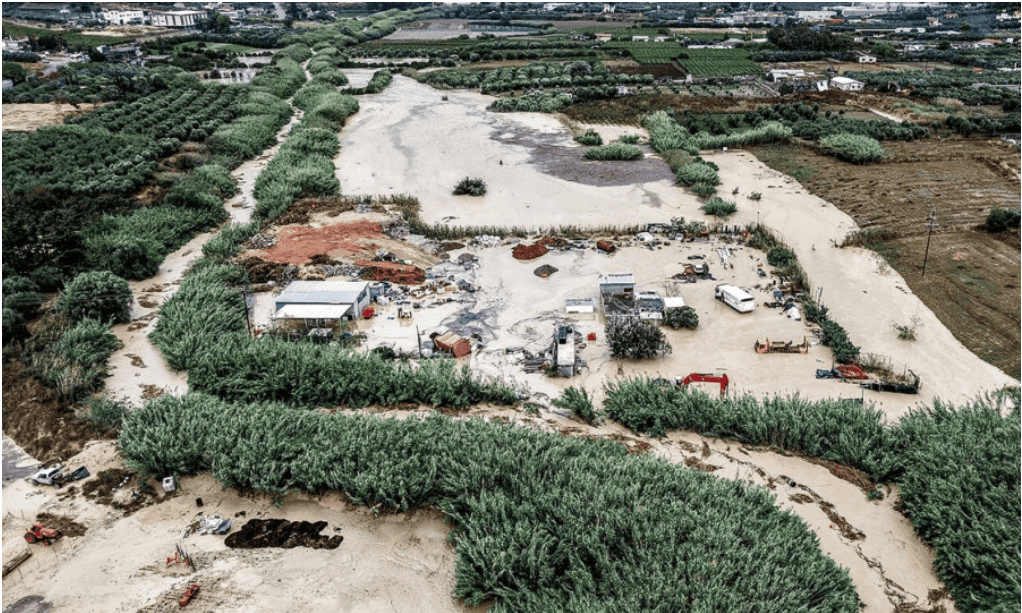
At least one person has died after an elderly livestock farmer from the Rethymno region went missing during the severe weather. His body was later found in the area around his livestock facilities, bringing a tragic human cost to a storm that has already caused extensive damage across Crete.
The worst conditions have been reported in parts of Rethymno, Heraklion and Lasithi, while authorities have repeatedly warned residents and visitors to avoid unnecessary travel.
The situation remains active, and weather conditions are expected to remain unsettled over the coming days.
A Powerful Storm Brings Crete to a Standstill
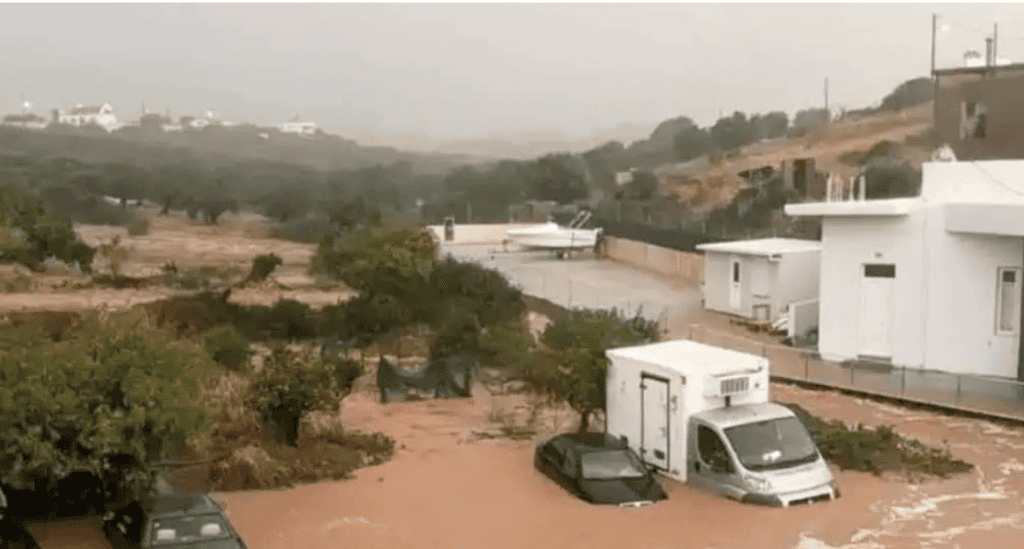
The current weather system began affecting Crete with particularly heavy rainfall from Wednesday, September 30, before intensifying on Thursday, October 1.
According to Greece’s National Observatory of Athens and its Meteo network, extremely high rainfall totals have been recorded, especially in the mountainous and northern parts of the island.
The most striking figure so far has been recorded at Anogeia in Rethymno, where rainfall reached approximately 361.4 millimetres between Wednesday and Thursday afternoon. That represents an extraordinary amount of water falling over a relatively short period.
Other areas have also recorded very significant rainfall, including parts of Lasithi and Chania.
The combination of already saturated ground, intense rainfall and mountainous terrain has created ideal conditions for flash flooding, overflowing streams and rivers, mudflows and landslides.
One Person Dies in Rethymno
The most serious development of the storm has been the death of an elderly livestock farmer in the Rethymno region.
The man, from the village of Karines in the Municipality of Agios Vasileios, had gone out to tend to his animals during the severe weather and was subsequently reported missing.
Search teams from the police and fire service were mobilized. His body was eventually discovered in the area around his livestock facilities.
The death has highlighted the dangers created by rapidly rising water and overflowing streams in rural and mountainous parts of Crete.
For local communities, particularly people living or working in mountainous areas, the danger is not limited to flooded streets. Streams and small waterways can rise extremely quickly, while roads can become impassable within minutes.
Roads Have Turned Into Rivers
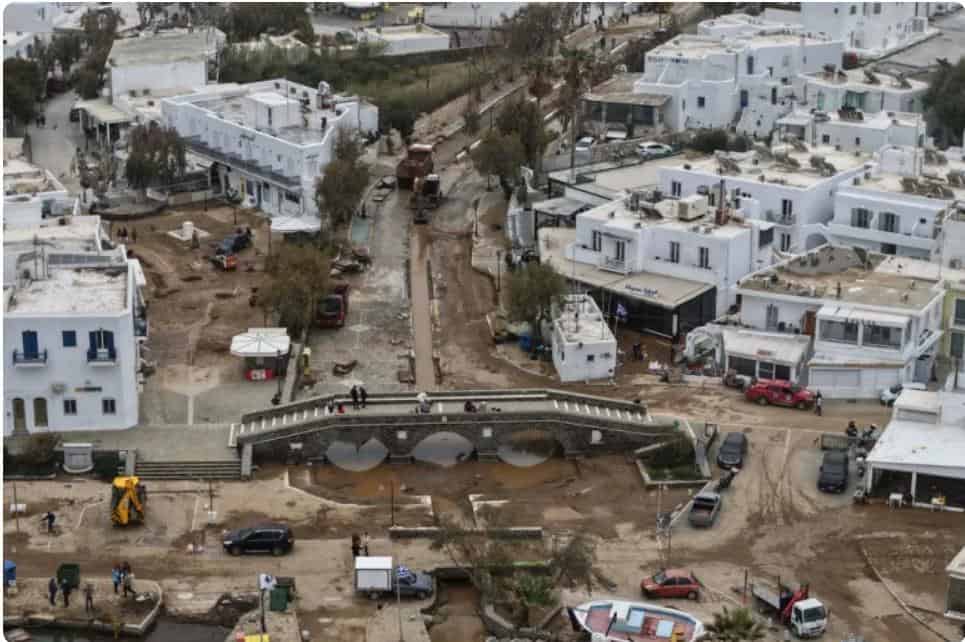
Across Crete, some roads have been transformed into channels of fast-moving water and mud.
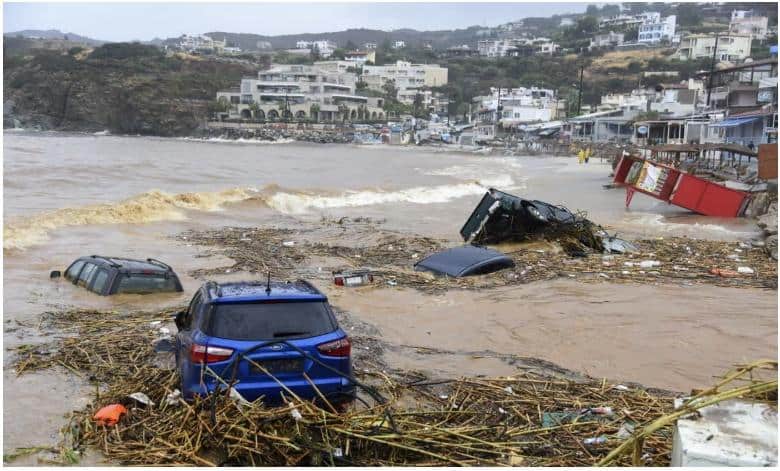
Floodwaters have entered homes and businesses, while vehicles have been stranded or swept away in several areas.
Emergency services have received hundreds of calls as residents have requested assistance with flooding, trapped vehicles and other problems caused by the storm. According to a report from SKAI, the Fire Service had received 255 calls, with 17 people transferred to safe locations and dozens of water-pumping operations carried out.
The situation has been particularly difficult in parts of Rethymno and Heraklion.
In some locations, overflowing rivers and streams have carried mud and debris onto roads, making travel extremely dangerous. Authorities have also reported problems involving bridges and other infrastructure.
A bridge in the village of Livadia, southwest of Heraklion, was partially damaged after floodwaters affected the structure. Two people were injured after their vehicle was caught while crossing the bridge and they were subsequently taken to hospital.
Rethymno Among the Hardest-Hit Areas
Rethymno has been one of the areas most severely affected by the storm.
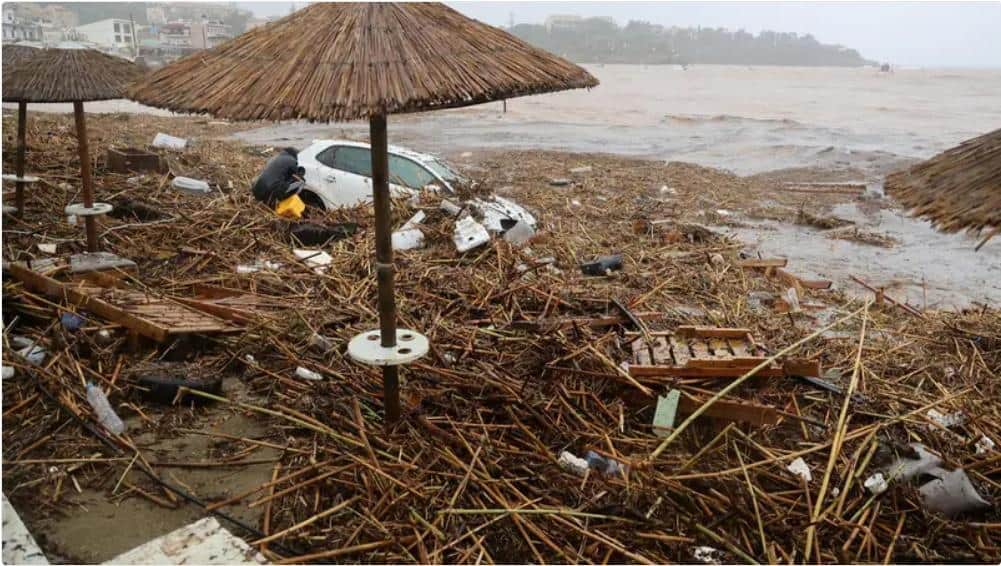
The combination of exceptionally high rainfall in the mountainous interior and intense runoff has caused rivers and streams to overflow.
Anogeia recorded the highest rainfall total reported by Meteo so far, with more than 361 millimetres recorded from Wednesday through Thursday afternoon.
Other areas of the Rethymno region have also experienced flooding, road damage and problems with electricity.
Emergency alerts have been issued to residents in areas including Mylopotamos and surrounding communities, urging people to restrict unnecessary movement and remain in safe locations.
Schools have also been closed in several areas because of the dangerous conditions.
Heraklion Also Hit by Severe Flooding
Heraklion has experienced significant problems as large quantities of water have moved through roads, streams and low-lying areas.
Reports from the region describe streets covered by floodwater and mud, vehicles becoming trapped and residents requiring assistance.
The overflowing Drakouliares River has also become a major concern, with emergency crews called to assist people affected by the rising water.
In some parts of the Heraklion region, the volume of water has been particularly difficult for drainage systems to handle.
The problem is especially serious in areas where intense rainfall arrives over a short period. Even roads that normally remain completely passable can quickly become dangerous when water begins flowing across them.
Lasithi Faces Flooding and Travel Restrictions
Eastern Crete has not escaped the storm.
Parts of Lasithi have also experienced intense rainfall, flooding and damage, while authorities have imposed restrictions in particularly vulnerable areas.
The Lasithi Plateau has been affected by the severe weather, with reports of significant damage to agricultural areas and restrictions on traffic because of the conditions.
Emergency warnings have also been sent to residents in several areas of Lasithi through Greece’s 112 emergency alert system, advising people to avoid unnecessary movement.
The warnings are particularly important in rural areas, where visitors may not immediately recognize which roads cross streams or flood-prone areas.
Chania and Western Crete Also Affected
Although Rethymno and Heraklion have been among the areas receiving significant attention, western Crete has also experienced dangerous weather.
Parts of Chania have seen heavy rainfall, while schools and other facilities have been affected by the conditions.
The storm is therefore not confined to one small part of the island. The geographical spread of the rainfall means that conditions can change rapidly between different areas of Crete.
Travelers should not assume that because the weather is relatively calm in one town, conditions will be safe a short distance away.
Mountain roads, gorges, river crossings and rural routes can be particularly dangerous during periods of extreme rainfall.
Emergency Alerts Sent Across Crete
Authorities have repeatedly used Greece’s 112 emergency alert system to warn residents and visitors about the dangerous conditions.
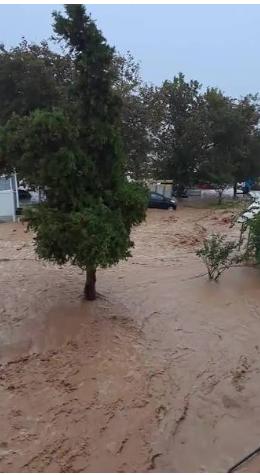
The messages have urged people in affected areas to limit unnecessary movement and avoid locations where floodwaters may accumulate.
The Region of Crete has placed its civil protection services on Red Code, reflecting the seriousness of the weather situation. Authorities are advising people to follow official instructions and avoid moving through flooded areas.
This is especially important because floodwater can be much deeper and faster-moving than it appears.
Drivers are also being warned not to attempt to cross flooded roads. A vehicle can lose traction or be swept away even when the water initially appears shallow.
The Weather Is Not Over Yet
One of the biggest concerns is that the storm is not necessarily finished.
According to the latest information from Greece’s Civil Protection authorities, strong rain and thunderstorms are expected to continue intermittently in Crete through Sunday, October 4.
There may be a temporary reduction in the intensity of the weather through Friday morning, but another deterioration is expected from Friday afternoon, with Saturday potentially bringing another period of significant rainfall.
Strong northeasterly winds are also affecting the Aegean, with gusts reaching 8 to 9 Beaufort in some areas.
These winds are creating additional difficulties for maritime travel and adding another hazard along exposed coastal areas.
For anyone currently in Crete, the key message is simple: the improvement of conditions in one location does not necessarily mean the weather threat has ended across the island.
What This Means for Tourists Visiting Crete
Crete remains one of Greece’s most popular tourist destinations, and October is normally an attractive month for travelers because temperatures are generally more comfortable than during the peak summer period.
However, visitors currently on the island should treat the present weather situation differently from an ordinary rainy day.
If you are staying in Crete during this period:
- Check official weather and emergency alerts regularly.
- Follow instructions sent through the 112 emergency system.
- Avoid unnecessary driving during periods of intense rain.
- Never attempt to cross a flooded road.
- Stay away from rivers, streams and temporary waterways.
- Avoid gorges and hiking routes while severe weather is forecast.
- Be particularly careful on mountain roads.
- Follow any local road closures or restrictions.
- Check ferry information before traveling between Crete and other islands.
- Contact your hotel or accommodation provider if you are unsure about local conditions.
The Region of Crete has specifically advised people to move away from underground spaces, coastal areas and rivers or streams when flooding is a risk. Authorities also advise against traveling during the peak of severe weather.
Crete’s Landscape Can Make Flash Flooding Particularly Dangerous
Crete’s dramatic geography is one of the reasons the island is so popular with travelers.
The island has high mountains, deep gorges, narrow valleys and countless streams that remain relatively small during dry periods.
During extreme rainfall, however, these same geographical features can concentrate enormous quantities of water into narrow channels.
Water falling high in the mountains can move rapidly toward lower areas, sometimes reaching roads and settlements much faster than people expect.
This is why travelers should be especially cautious when visiting mountain villages, hiking areas, gorges or remote beaches during periods of severe weather.
A route that is perfectly safe on a sunny October morning can become hazardous after hours of heavy rain.
A Difficult Day for Crete
The October 1 storm has already left a serious mark on the island.
One person has lost his life, while communities across Rethymno, Heraklion and Lasithi are dealing with flooded properties, damaged infrastructure, disrupted roads and difficult travel conditions.
The full extent of the damage will only become clear once the water recedes and authorities can properly inspect roads, bridges, homes, agricultural land and other infrastructure.
For now, emergency services remain on alert and residents are being urged to take the warnings seriously.
The extreme rainfall recorded in parts of Crete — including more than 361 millimetres at Anogeia — demonstrates just how exceptional the current weather event has become.
Crete is famous for its beaches, villages, mountains and outdoor experiences, but the current conditions are a reminder that the island’s natural environment can also become extremely powerful during severe weather.
For residents and travelers alike, the priority over the next several days is safety.
The weather is expected to remain unsettled, with further heavy rain possible through the weekend. Anyone currently on Crete should monitor official announcements, respect local restrictions and avoid taking unnecessary risks until the severe weather has passed.
This article was updated on October 1, 2026, based on the latest available reports. Conditions remain subject to change as the weather system develops.
About The Author