Call us at +306949885983

Italy Deports Preacher After He Defended Marriage of Girls as Young as Nine

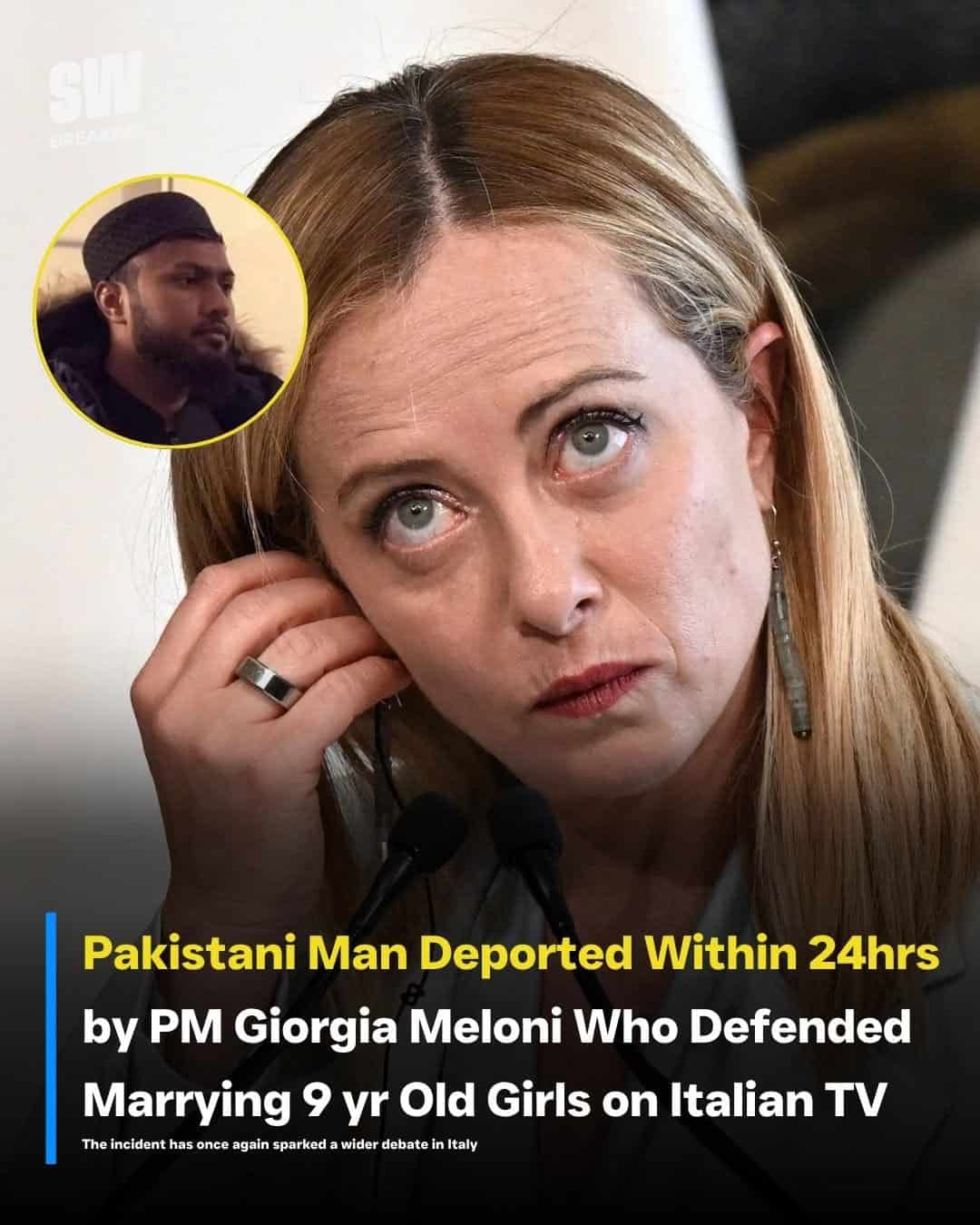
Italy has sent a striking message about the limits of religious and cultural practices inside its borders after authorities expelled a Pakistani preacher who publicly defended the possibility of marrying girls as young as nine.
The case has sparked a wider debate about child protection, integration, freedom of religion and the responsibility of religious figures living in Europe.
The man, identified in Italian reporting as Ali Kashif, was 25 and had occasionally served as an imam at two Islamic centers in Brescia.
His comments came to public attention after an undercover television investigation broadcast footage of conversations with him. During the investigation, he was asked about the age at which a girl could be considered an adult according to Islamic teachings.
The answer caused immediate controversy.
He reportedly indicated that a girl could be considered eligible for marriage from around the age of nine.
Italian authorities subsequently moved to expel him from the country.
And the case has become much bigger than one individual.
It has raised a fundamental question:
Where should Europe draw the line when religious interpretations conflict with the protection of children?
What Happened in Brescia?
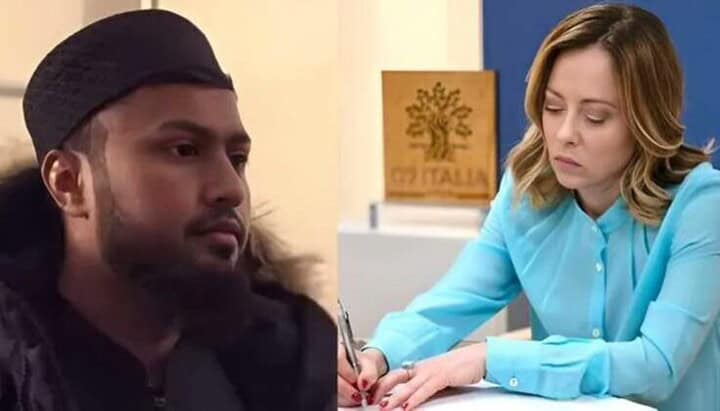
The controversy began with an investigation broadcast by Italian television program Fuori dal Coro.
The investigation used a hidden camera and involved a reporter presenting himself as someone interested in learning more about Islam.
During the conversation, Kashif was questioned about when a girl could be regarded as an adult.
His response reportedly referred to puberty and Islamic religious interpretations and suggested that marriage could be permissible at an age as young as nine.
The comments were recorded and later broadcast nationally.
The reaction was immediate.
The issue was not simply that an individual had expressed an unusual personal opinion.
The person involved was reportedly functioning as an imam at Islamic centers, meaning that his statements could potentially influence members of a religious community.
That distinction became important to Italian authorities.
Italy Decided His Presence Was No Longer Acceptable
Following the television investigation, authorities in Brescia examined the case.
The local police commissioner, or Questore, ultimately ordered the man’s expulsion, with his statements considered relevant to an assessment of his social dangerousness.
He was subsequently taken to Milan’s Malpensa Airport and placed on a flight to Pakistan.
The decision demonstrates something important about Italy’s approach to foreign nationals who are considered a danger to public order.
A person who is not an Italian citizen does not automatically have an unlimited right to remain in Italy simply because they have established themselves in the country or participate in a religious community.
Italian authorities have mechanisms allowing certain foreign nationals to be removed when their presence is considered incompatible with public security or public order requirements.
That does not mean that every controversial religious statement automatically results in deportation.
In this particular case, however, authorities considered the circumstances serious enough to justify removal.
Child Marriage Is Not Compatible With Italian Law
There is another critical point.
Italy does not recognize child marriage as an acceptable cultural or religious practice.
Italian law provides strong protections for minors and specifically criminalizes forcing or inducing someone into marriage.
The country’s legal system also recognizes the particularly serious nature of offenses involving minors.
That reflects a much broader European principle:
Children have individual rights that cannot simply be overridden by cultural or religious tradition.
A child cannot be treated as the property of a family, religious community or future husband.
Marriage requires genuine consent.
And the younger the child, the more obvious the problems surrounding meaningful consent become.
This is precisely why forced and early marriage has become an international human-rights concern.
Italy has also repeatedly stated its opposition to forced marriages and its commitment to protecting women and girls from coercion.
The Religious Freedom Question
The case inevitably raises another difficult issue.
Europe protects freedom of religion.
People are free to worship.
They are free to practice their faith.
They are free to teach religious beliefs.
But religious freedom does not mean that religious rules automatically override national law.
That distinction is essential.
A mosque operating in Italy is subject to Italian law.
An imam living in Italy is subject to Italian law.
A religious community is free to maintain its traditions within the boundaries established by the Italian legal system.
And when those boundaries involve the protection of children, Italian authorities have made their position particularly clear.
Religious belief does not create a separate legal system.
That principle applies regardless of whether the issue involves Islam, Christianity, Judaism or any other religion.
The law applies equally.
Why The Age of Nine Caused Such Outrage
The idea of marriage involving a nine-year-old is shocking to modern European society for obvious reasons.
A nine-year-old is a child.
Children at that age are still developing emotionally, psychologically and physically. They are normally attending primary school, living under the protection of their parents and depending on adults for almost every major decision.
They cannot reasonably be expected to navigate the responsibilities and consequences associated with adult marriage.
That is why the suggestion that a nine-year-old could be treated as an adult for marriage purposes generated such strong condemnation.
The debate therefore goes beyond religion.
It concerns the fundamental definition of childhood.
🇪🇺 A Wider European Debate
The Italian case also touches on a discussion taking place across Europe.
European countries have become increasingly focused on questions surrounding integration and social cohesion.
Large immigrant communities have become established across the continent, bringing with them languages, cuisines, traditions and religious practices from many parts of the world.
That diversity is a reality of modern Europe.
But successful integration requires something else as well.
A shared legal framework.
People can maintain their cultural and religious identities while still respecting the laws of the country where they live.
That means respecting equality between men and women.
It means respecting children’s rights.
It means accepting the authority of democratic institutions.
And it means understanding that certain practices that may have existed elsewhere cannot simply be imported into European society if they violate European law.
This Is Not About Ordinary Muslims
That distinction is important.
Millions of Muslims live peacefully across Europe.
They work, raise families, attend schools, operate businesses and participate in their communities.
The actions of one religious figure should not automatically be attributed to an entire religious population.
In fact, Muslims themselves can be among the strongest opponents of forced marriage and abuse of children.
The relevant question is not whether someone is Muslim, Pakistani, Christian, European or anything else.
The relevant question is whether someone is willing to respect the law.
That is the standard that should apply to everyone.
What Italy’s Decision Really Says
The significance of this case lies partly in the message it sends.
Italy is effectively saying that living inside the country means accepting the country’s legal boundaries.
Religious leaders have an additional responsibility because their words can influence other people.
An imam, priest, rabbi or any other religious authority can exercise considerable influence over members of their community.
That influence comes with responsibility.
When children are involved, the responsibility becomes even greater.
Italy’s decision therefore represents a broader principle:
Freedom of religion exists alongside the protection of children, not above it.
That is an important distinction.
Italy Draws a Clear Line
The case involving Ali Kashif has generated controversy because it forces Europe to confront an uncomfortable question.
What happens when a religious interpretation conflicts with fundamental protections established by European law?
Italy’s answer in this case was decisive.
The authorities investigated.
They assessed the preacher’s statements.
They determined that his presence represented a sufficient concern to justify expulsion.
And he was returned to Pakistan.
The episode should not be interpreted as an argument against an entire religion or nationality.
It is an argument for something much simpler:
European law must remain the final authority inside Europe.
Children deserve protection regardless of their religion or family background.
Girls should not be pressured into marriages they cannot meaningfully consent to.
And no religious leader should be able to use religious teachings as a justification for practices prohibited by the country in which he lives.
The Bigger Question for Europe
The Italian case is likely to continue fueling a much larger European conversation about integration, immigration and the preservation of fundamental rights.
Europe can remain open to people from different cultures while still insisting on certain non-negotiable principles.
The protection of children is one of them.
Equality before the law is another.
Freedom from forced marriage is another.
And freedom of religion must operate within that framework.
Italy’s decision therefore goes beyond one preacher and one television investigation.
It reinforces a principle that European governments will increasingly be expected to defend:
You are free to practice your religion in Italy. But Italian law protects Italian children, and no religious interpretation can place a child outside that protection.
For many Europeans, that is not an attack on religious freedom.
It is precisely what the rule of law is supposed to guarantee.
About The Author
