Call us at +306949885983

THIS Ancient Greek City Vanished Beneath the Sea (And Was Found Under Dry Land)

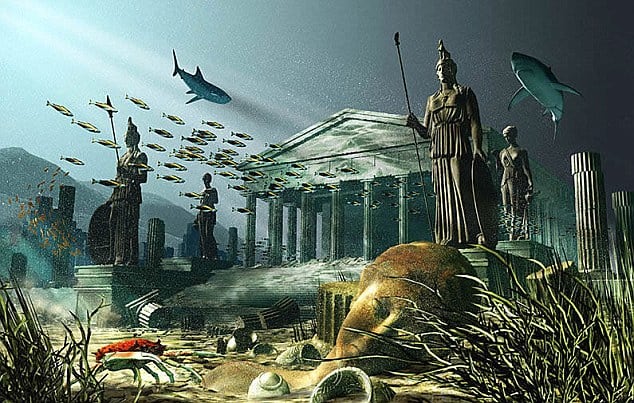
When we talk about sunken ancient cities, the conversation almost inevitably drifts toward Atlantis. But while Plato’s legendary island was an allegory, the ancient world was acutely aware of a very real, very powerful Greek metropolis that vanished beneath the waves in a single night.
For centuries, historians, archaeologists, and treasure hunters scoured the bottom of the Gulf of Corinth looking for it. They deployed sonar, dragged the seabed, and sent scuba divers into the deep, looking for the legendary “Atlantis of Greece.” But they were looking in the wrong place. The city that was famously swallowed by the sea wasn’t underwater at all anymore.
It was Helike. And after being hidden beneath the sea for millennia, it was finally discovered entirely buried under solid, dry land.
The Rise of Helike (A Powerhouse of the Classical World)
To understand the magnitude of the loss, you have to understand what Helike was. Located on the northern coast of the Peloponnese in Achaea, Helike wasn’t just a minor settlement—it was a superpower.
Founded during the Bronze Age, Helike grew to become the principal city of the Achaean League, a powerful confederation of twelve cities. It was a thriving economic and cultural hub that commanded immense respect across the Mediterranean. The city minted its own silver coins, established prosperous colonies as far away as southern Italy (including the famous city of Sybaris), and boasted a formidable naval fleet.
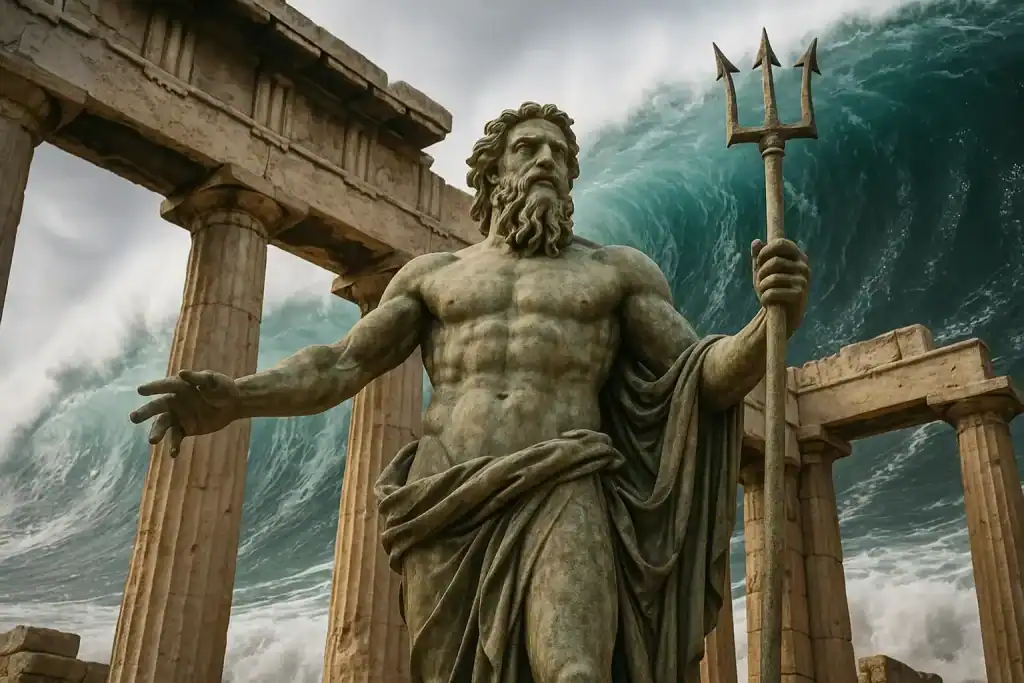
But Helike’s true claim to fame was its religious significance. The city was the undisputed center for the cult of Poseidon Helikonios—the god of the sea, storms, and, crucially, earthquakes.
The Panionian sanctuary dedicated to Poseidon in Helike was a marvel of the ancient world. It featured a colossal bronze statue of the sea god that rivaled the greatest monuments of Athens and Delphi.
Pilgrims and wealth flowed into the city, seeking the favor of the Earth-Shaker. Ironically, the very deity they worshipped to protect them from tectonic violence would be the one ancient historians blamed for the city’s ultimate erasure.
The Wrath of Poseidon (The Cataclysm of 373 BC)
The end of Helike did not come slowly like the rising tides that claimed other ancient settlements. It happened with terrifying speed in the winter of 373 BC.
According to ancient writers like Aelian and Diodorus Siculus, the city received five days of grim warnings. In a mass exodus that baffled the human residents, mice, snakes, centipedes, and every other creeping creature abandoned the city, fleeing in massive swarms toward the mountains. The citizens watched in confusion, unaware that the animals were sensing the micro-tremors of impending geological doom.
On the fifth night, the cataclysm struck.
A massive tectonic earthquake ripped through the Gulf of Corinth. The ground beneath Helike didn’t just shake; it experienced a catastrophic geological phenomenon known as soil liquefaction. The violent shaking caused the water-saturated coastal soil to lose its structural integrity, turning the solid ground into a liquid slurry.
The entire city simply dropped, plunging below sea level in a matter of minutes. Immediately following the earthquake, a towering tsunami rushed into the void. The sea violently consumed what was left of the city, drowning its inhabitants instantly. The destruction was so absolute that ten Spartan ships anchored in the city’s harbor were pulled down into the abyss alongside the temples and homes.
When morning broke, the great city of Helike was gone. In its place was a muddy, turbulent inland lagoon. Only the tops of the trees from Poseidon’s sacred grove were visible above the water.
The Underwater Tourist Attraction
The complete annihilation of a major Greek superpower sent shockwaves through the ancient world. Many believed it was divine retribution. Some historians suggest that this very event, which occurred just a dozen years before Plato wrote his dialogues Timaeus and Critias, was the direct, real-world inspiration for his story of Atlantis.
But Helike didn’t disappear from human memory—in fact, it became something of a dark tourist attraction.
For hundreds of years, the ruins sat submerged in the lagoon. Roman tourists, philosophers, and writers would visit the site, hiring local boatmen to row them out over the sunken city.
The geographer Eratosthenes visited the site and noted that the ferrymen would point down into the water to show passengers the colossal bronze statue of Poseidon, still standing upright in the deep, its trident perilously close to the surface, snagging fishermen’s nets.
The Roman poet Ovid wrote about sailing over the “submerged Helike,” observing the ruined walls through the clear water.
The geographer Pausanias visited centuries later and confirmed the ruins were still visible, though heavily corroded by the salt water.
The Slow Disappearance
If the ruins were visible to the Romans, why was the city considered “lost” in the modern era?
The answer lies in the relentless geology of the region. The rivers that flowed down from the Peloponnesian mountains carried vast amounts of silt and sediment. Over the course of two millennia, these rivers emptied their sediment directly into the lagoon covering Helike.
Century by century, the lagoon grew shallower.
The bronze statue of Poseidon, the temples, and the ruined walls were slowly buried under millions of tons of mud. Eventually, the lagoon filled in completely, turning into a solid coastal plain. The sea retreated to its modern shoreline.
By the time modern archaeologists began searching for Helike in the 19th and 20th centuries, they assumed the “sunken city” was out in the deep waters of the Gulf of Corinth.
They spent decades running sonar sweeps and sending divers into the open sea, searching in vain for stone blocks and bronze statues. They found nothing, because the city was no longer beneath the sea. It was beneath their feet.
The Breakthrough Discovery
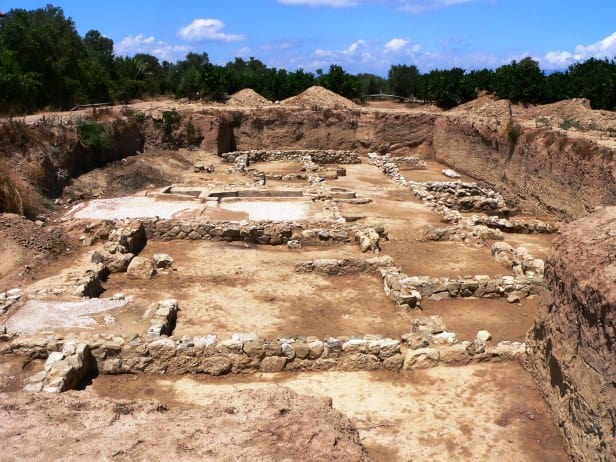
The mystery was finally solved thanks to a radical shift in thinking by the Helike Project, launched in 1988 by Greek archaeologist Dora Katsonopoulou and American physicist Steven Soter.
They realized that the ancient texts describing a “lagoon” (rather than the open ocean) meant the ruins had likely been silted over. They stopped looking in the water and started looking at the dry coastal plain between the mountains and the modern beach near the village of Rizomylos.
Because the ruins were buried deep beneath the water table, standard ground-penetrating radar was useless. Instead, the team drilled dozens of boreholes across the plain, bringing up core samples from the deep mud.
In 1994, the drill bits started hitting something hard. When the cores came up, they contained fragments of ancient ceramics, brick, and stone.
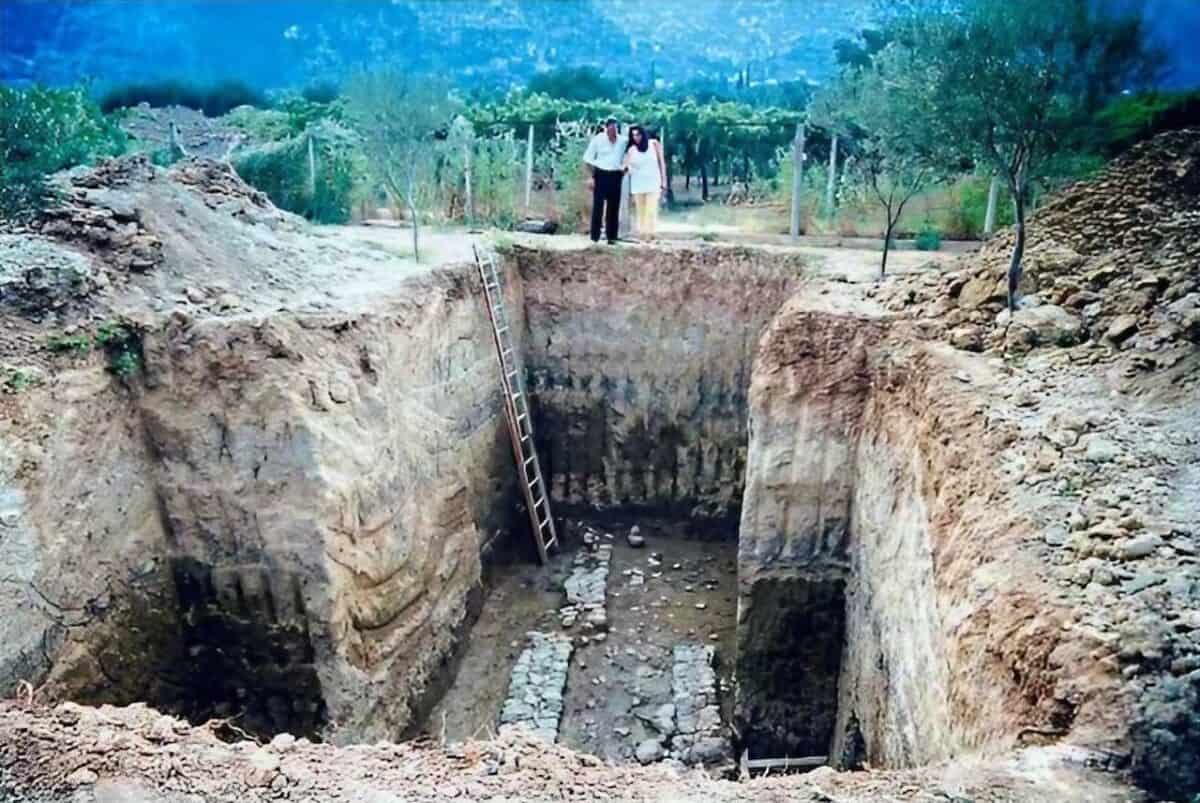
In 2001, they finally brought in heavy machinery to dig massive trenches down through the mud and water. Pumping water out furiously to keep the trenches from collapsing, they finally hit paydirt.
Buried several meters beneath the solid earth, they uncovered the classical city. They found cobbled streets, classical building foundations, roof tiles, and pottery perfectly matching the 373 BC destruction date.
The artifacts showed distinct signs of marine encrustation—proving that they had been submerged in seawater for centuries before being entombed in river mud.
Helike had been found. The city that was famously lost to the sea was dug out of a carrot field.
What Helike Means for Archaeology
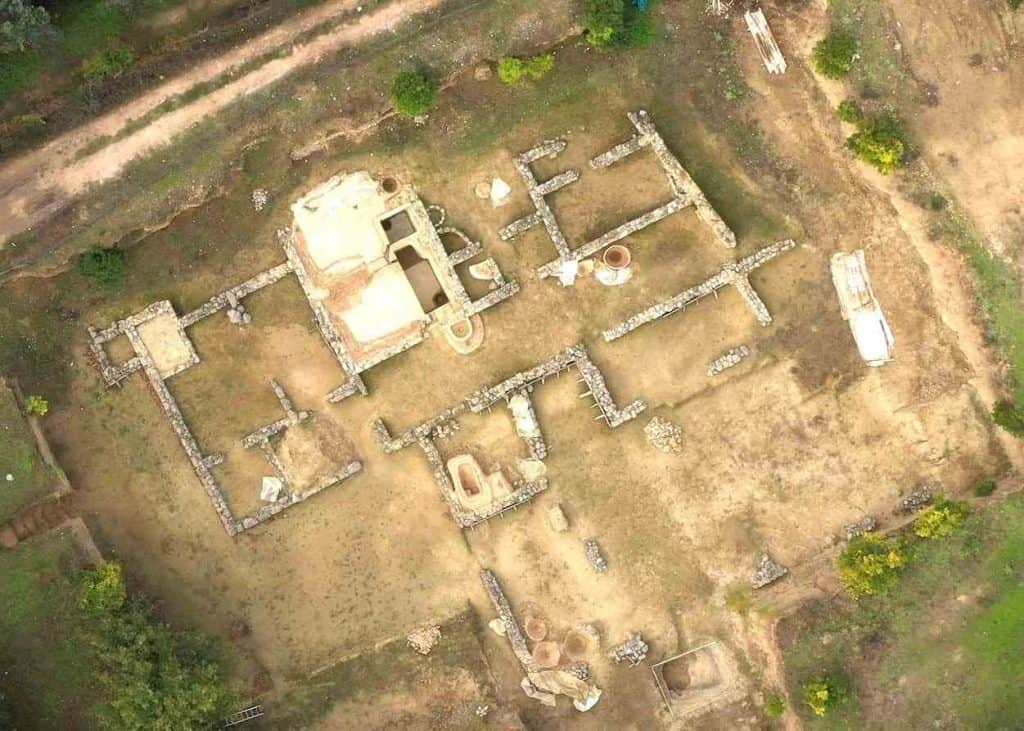
The ongoing excavation of Helike is one of the most significant archaeological endeavors of the 21st century.
Because the city was destroyed instantly and never rebuilt or looted by later civilizations, it is effectively a “wet Pompeii.”
Everything from coins and pottery to the layout of the streets remains exactly as it was on that winter night in 373 BC. The site has provided unparalleled insights into classical Greek urban planning, wealth distribution, and daily life.
Furthermore, the deeper the archaeologists dug beneath the classical city, the more they found. They discovered that the 373 BC earthquake wasn’t an isolated event. Beneath classical Helike lie the ruins of an entirely separate Bronze Age settlement that was destroyed by an identical earthquake and tsunami around 2400 BC, and an even older Neolithic settlement below that. The site is a layered cake of civilizations, all destroyed by the exact same, repeating geological phenomena.
How to Visit Helike Today
Unlike the sun-drenched, accessible ruins of the Parthenon or Delphi, visiting Helike requires a bit of imagination.
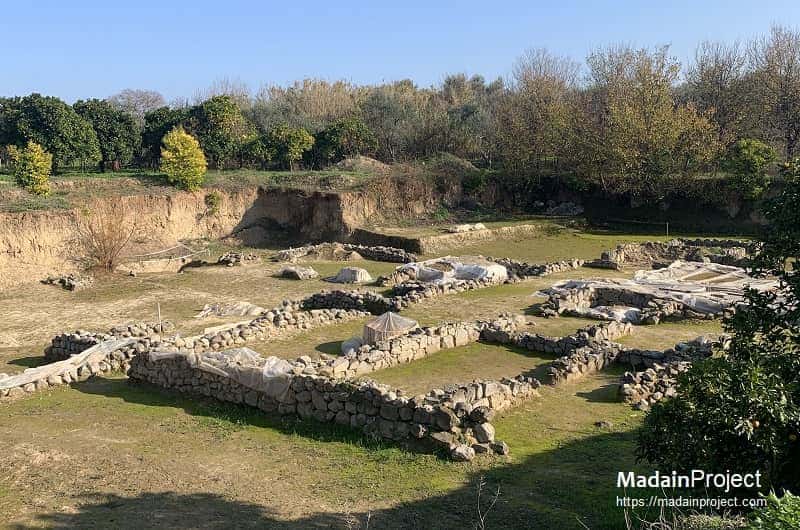
Because the classical ruins sit below the modern water table, excavations are incredibly difficult and expensive. Trenches must be constantly pumped dry during the digging season, and to protect the fragile ruins from weather and degradation, many trenches are re-buried with earth once they have been thoroughly documented.
Therefore, there is no sprawling “ruin park” with towering columns to walk through on the coastal plain near Rizomylos. However, the region is highly accessible and deeply rewarding for history enthusiasts.
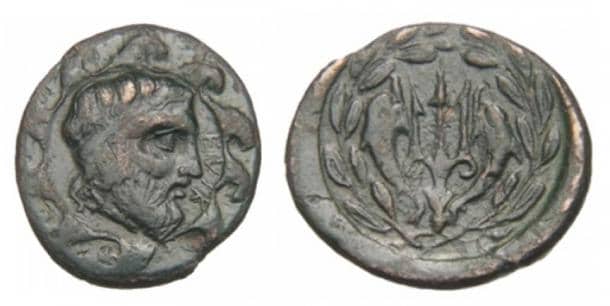
The best way to connect with the lost city today is to visit the Archaeological Museum of Aigio, located just a few kilometers from the excavation sites.
The museum houses many of the spectacular finds pulled from the mud of Helike, including intact classical pottery, bronze artifacts, and the coins that were minted by the doomed city.
Standing on the modern beach at the Gulf of Corinth today, looking out at the water, it is almost impossible to imagine that the violent sea once swallowed an entire civilization here—only to slowly, quietly give the land back.
About The Author
